


What began as a routine political outreach quickly transformed into one of the most emotional and talked-about moments in Sierra Leone’s emerging political space, as Dr. Ibrahim Bangura took his movement to the southern district of Pujehun, delivering a message that has since sparked conversations far beyond the communities he visited.

Last Friday, the Dr. Ibrahim Bangura Movement arrived in Jendema, a border town near Liberia, where the reception was nothing short of historic. From the moment his convoy entered the town, the atmosphere was filled with excitement, cultural pride, and anticipation. Women, youths, and elders gathered in large numbers, welcoming him with traditional dances, songs, and vibrant performances that reflected the deep cultural identity of the people.
Dr. Bangura was received by the Paramount Chief of Pujehun, P.C. Mustapha Jenje Massaquoi III, alongside sub-chiefs and community leaders, in what many described as a significant show of recognition and respect. The visit was facilitated by Naasu Fofanah, a member of the All People’s Congress and former Special Adviser on Gender to former President Ernest Bai Koroma, who mobilized the community and coordinated the event in collaboration with the Women of Wanjama, a growing grassroots women’s group known for its advocacy and unity.
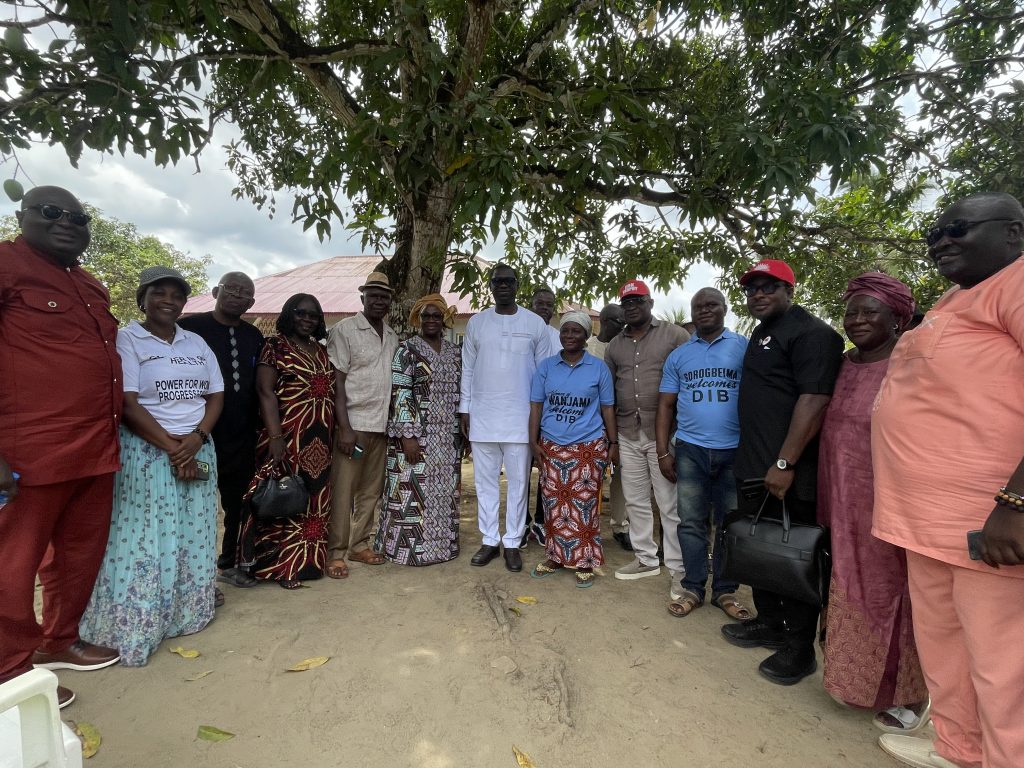
Dressed in coordinated blue outfits, the Women of Wanjama filled the air with songs and dance, creating a symbolic and powerful image of solidarity. In her address, Naasu Fofanah openly declared her confidence in Dr. Bangura, urging the people of Jendema and surrounding communities to support him in the upcoming elections. She explained that her decision to invite him was driven by her conviction after closely following his message and vision, stating that she believed he represents the leadership Sierra Leone needs at this time. According to her, the visit was not only for her to know him better but also to give the people the opportunity to meet and assess him directly.
In line with local traditions, members of the community presented Dr. Bangura with gifts, including a live goat and chickens, a gesture that symbolizes acceptance, honor, and goodwill. The moment further reinforced the connection between the movement and the grassroots, as community members expressed their hopes for development and progress.
Also present was Minkailu Koroma, an intending spokesperson of the All People’s Congress and a member of the movement, who introduced members of the delegation, including media representatives and prominent political figure Diana Finda Konomanyi, whose consistent presence has been interpreted by observers as a strong endorsement of the movement’s growing influence.

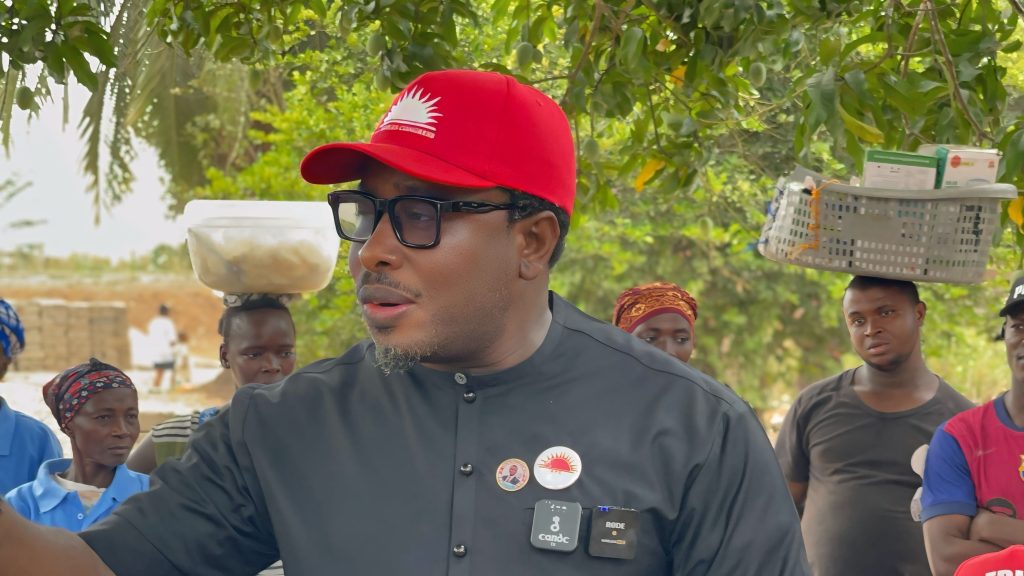
From Jendema, the movement proceeded to the Fairo Community, where an even larger crowd had gathered, waiting for hours to receive him. The energy was intense, and expectations were high. It was here that Dr. Bangura delivered a speech that many attendees described as deeply moving, as he shared a personal story that would redefine the tone of the gathering.
Recounting an experience from decades ago during his time as a student, Dr. Bangura told the crowd about a mission that took him to Somalia under a program known as the Somali Women’s Agenda. “I left from Kenya and landed in a place called Bosaso, located in the central part of Somalia by the Indian Ocean,” he said. “When I landed in Bosaso, I was arrested because they doubted the purpose of my trip.”
He described the environment as one of the most tense and difficult places he had ever encountered. “It was a very tense atmosphere, one of the saddest places in the world. The place was so quiet that even if a pin dropped, you would hear it. There was no movement, no sound, just silence and fear,” he added.
According to him, he was placed in a detention centre where he met a woman whose story would leave a permanent mark on him. “They put me in a detention centre where I met a woman named Mariam Yaseed. She was also arrested and detained. She was a woman who stood up to fight for other women and children in Somalia,” he said.
Narrating their interaction, he continued, “She asked me what brought me there, and I told her. Then I asked her the same question. She said, ‘I am fighting.’ I asked her why she was fighting, and she said, ‘I need to fight so my children can live.’”
The crowd fell into a reflective silence as he went on. “She told me she knew this fight could lead to her death, but she did not mind dying if it meant her children would live. She said she did not have guns, she had no weapons, all she had was her voice to tell those doing wrong that they must stop. She said it was important for her to make that sacrifice.”
Dr. Bangura paused before adding, “I do not know if she is still alive today, but that story has never left me.”
Drawing a direct connection between that experience and the women gathered before him, he declared, “When I look at the crowd here today filled with women, I see Mariam Yaseed in every one of you, because you women make sacrifices for the future of our children.”
He used the moment to address what he described as the long-standing marginalization of women in Sierra Leone. “It is not easy to be a woman in this country. For a long time, you have been marginalized. The thing called patriarchy has made men dominate everywhere, in politics, in the economy, in everything. Your voice, your identity, your recognition have been pushed aside,” he said.
He went further to highlight the realities many women face daily. “Most of you struggle for everything, and many of you are the breadwinners of your homes, even with men present. It is you who make sure your families eat. When you are sick, you cannot afford the care you need. In business, you are embarrassed by loan companies, and many of you are not even given opportunities,” he added.
According to him, only a few individuals have truly stood up for women in the country, stressing the need for a more inclusive and intentional approach to governance. “The only way Sierra Leone will move forward is when we invest in women. If we do not invest in women, this country will never move forward,” he said firmly.
He emphasized the importance of education and empowerment, stating, “The more women become educated and have the capacity to contribute, the better it will be for Sierra Leone.”
Calling for a shift from rhetoric to action, he said, “We need a government that will take into consideration policies that encourage women and children, not just by talking but in action. People must see it in a tangible way that we mean to include women in the development of our country.”
He also referenced what he described as a “gatekeeping syndrome” that continues to limit opportunities for women, urging for a system that opens doors rather than restricts them.
In a moment that drew applause, he acknowledged the Women of Wanjama for their vision to build a village for women, a project already underway. He congratulated them and pledged his support, stating that initiatives like theirs represent the kind of grassroots development Sierra Leone needs.
The event ended in celebration, with music, dancing, and renewed energy among supporters, as Dr. Bangura and his team departed the district. However, the momentum did not end there. On Saturday, he continued his outreach with a visit to the Red Pump Community in Freetown, where he was once again received by a large and enthusiastic crowd, further strengthening the perception of a movement gaining traction across different regions of the country.
As reactions continue to pour in from across Sierra Leone, many observers believe that the Pujehun visit may mark a turning point in the political narrative, particularly in how issues of women empowerment and grassroots engagement are being framed. For now, one thing is certain — Dr. Ibrahim Bangura’s message has resonated, and the conversation it has sparked is only just beginning.