

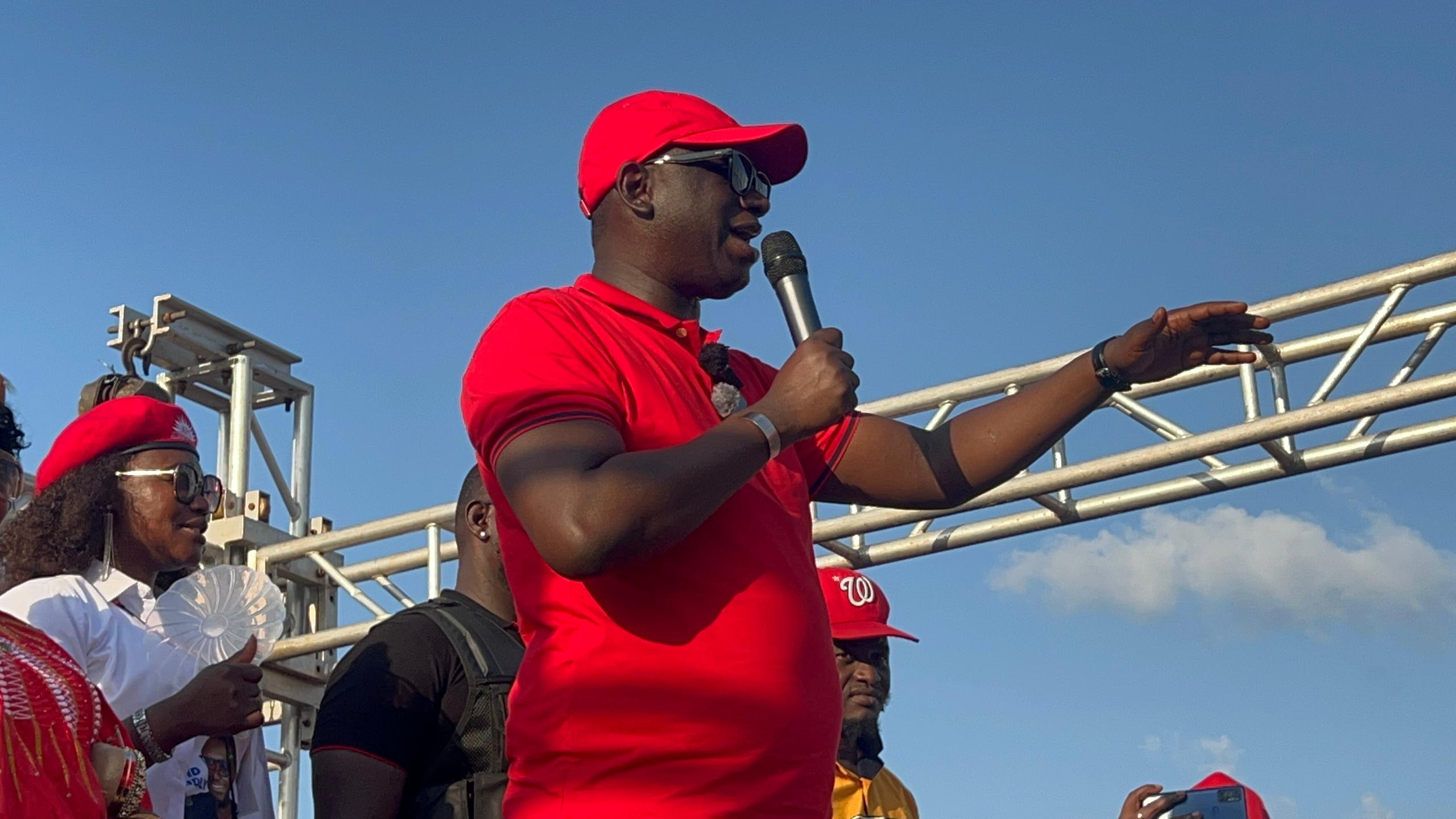

Prominent All People’s Congress (APC) flagbearer aspirant, Dr. Ibrahim Bangura, has declared that the APC does not owe him the party’s flagbearership despite his decades of service and sacrifice, stating that his commitment to the party has always been driven by duty rather than personal reward.
Dr. Bangura made the remarks on Friday while addressing supporters, party faithful and members of the DIB Iron Ladies UK and Ireland Branch during a symposium held in the United Kingdom.
In what appeared to be one of his most personal and reflective speeches since declaring his interest in the APC flagbearership race, Bangura recounted his political journey from childhood activism within the APC to becoming one of the party’s most visible figures on the national stage.
“I am in this race because I want to see the APC return to power in 2028,” he told the gathering. “I served the APC in different ways. In the better parts of my life, I did a lot for the party, but behind the scenes. When you work for someone or an institution, it is not to seek reward. You have to effectively deliver.”
The political strategist and peacebuilding expert said he has never viewed political service as a transaction and does not believe loyalty to the APC automatically entitles him to leadership.

“I am a result-oriented person. I do not want to be praised for anything. I work because I believe that my work for the APC is a commitment, not for the APC to work for me,” he said.
In one of the speech’s most striking moments, Bangura emphatically declared that despite years of dedication to the APC, he believes the party owes him nothing.
“I worked for the APC party as a child, but the APC does not owe me anything. The APC does not owe me to become flagbearer.”
The statement drew applause from attendees, many of whom viewed it as a demonstration of humility and commitment to party principles at a time when internal competition among aspirants is intensifying ahead of the party’s next leadership contest.
Bangura reflected on some of the most difficult moments in the APC’s history, recalling how party stalwarts remained committed during periods of political uncertainty and adversity.
Referring to the aftermath of the 1992 military coup, he described how older APC members remained united despite lacking wealth or influence.
“I saw my father and others. They were not rich. They did not have much, but the most important thing they had was love amongst themselves. They used that love, that commitment, that dedication to say this party will not die, this party will come back and this party will take power in Sierra Leone.”
He further revealed that his political activism began at a young age and continued throughout his student years.
“In 1996, when we got the transition to democracy, I formed the Rising Sun of the Children of the APC. I was a teenager. When I got to Fourah Bay College in 2000, I became president of the student wing of the party and served for four years.”
Bangura noted that his involvement in the APC came at a time when public support for the party was far less popular than it is today.
“These were days when it was not fashionable to be an APC member,” he said.
The APC aspirant also used the occasion to define the philosophy behind the DIB Movement, stressing that it was never intended to become a personality cult.
“The movement that we built and that we continue to work on is aimed at showing Sierra Leone that whenever politics is discussed, it is not supposed to be about an individual. This movement is bigger than me.”
He warned that political organizations centered solely around one person are unlikely to endure.
“Any movement that is just about an individual is not a serious movement.”
Bangura also appealed for civility among APC aspirants and supporters, arguing that internal competition should not degenerate into hostility.
“The race we are on right now is not supposed to be a bitter one. It is not supposed to be filled with acrimony.”
Looking beyond politics, Bangura spoke emotionally about legacy, mortality and his desire to be remembered for meaningful service to Sierra Leone.
“I am constantly reminded of my mortality, that there will be an end date somewhere,” he said. “I will live beyond the flesh and blood. I will live in the minds of people, but I want to live in the hearts of Sierra Leoneans as someone who made a difference.”
He said he believes he has reached a point in life where he can effectively bridge the gap between older and younger generations while contributing significantly to national development.
“I believe I am at the age and stage to contribute to the development of Sierra Leone. I am at the age that I will be able to serve as the bridge between the young ones and the older generation.”
Bangura further highlighted his deep roots within the APC and his international experience, which he believes positions him to provide transformative leadership.
“I have deep roots in the APC. I was born there. But beyond that root, I have wide experience beyond both the party and the country. If we combine the two, we will be able to help both the party and the country.”
He concluded by urging APC stakeholders and aspirants to focus on the bigger objective of national leadership rather than personal ambitions.
“APC has some of the finest brains in the world. All of us who are running for this office need to come together and understand that what is ahead of us is bigger than all of us.”
As the APC gradually prepares for its next flagbearership contest, Bangura’s remarks are likely to fuel conversations across the party, particularly his declaration that the APC owes him nothing despite more than three decades of active service, a statement many observers may interpret as both a challenge to entitlement politics and a defining message of his campaign.