Sierra Leone is confronting two connected but distinct drug challenges. One is visible in communities across the country: the growing abuse of Kush and other substances, particularly among young people, with consequences for families, public health, education, employment and public safety. The other operates largely behind the scenes: the movement of cocaine through international trafficking networks, the use of West African territory and ports as transit points, and allegations that criminal interests have developed relationships with people in positions of influence.
Both challenges demand urgent attention. But they must also be examined carefully, because the distinction between what has been established, what authorities allege and what remains unproven is essential to a credible national response.
The emergence of Dutch fugitive Jos Leijdekkers, widely known as Bolle Jos, in Sierra Leone has brought the country’s international drug-trafficking concerns into sharper focus. His continued reported presence in the country, the Netherlands’ extradition requests, a major cocaine seizure involving a vessel that departed Freetown, and an explosive investigation by Britain’s The Guardian have raised questions about the country’s ability to confront organised crime.
The issue is no longer simply about the availability of drugs on the streets of Freetown. It concerns the strength of national institutions, the integrity of law enforcement, the protection of young people and the country’s standing among international partners.
The Kush emergency and its human cost
In April 2024, President Julius Maada Bio declared a national emergency over drug and substance abuse, following mounting concern about the spread of Kush and its impact on young people.
The declaration acknowledged a crisis that families, health workers, community leaders and civil society organisations had been raising for some time. Reports of addiction, psychological distress, homelessness, family breakdown and deaths associated with substance abuse had become increasingly common.
Kush is the street name for a dangerous drug mixture. Its composition can vary, and it should not be treated as a single, consistently manufactured substance. Reports have associated some formulations with synthetic cannabinoids and other harmful substances, but the precise ingredients and strength of individual batches are not always established. This makes the drug particularly difficult to regulate and increases the risks faced by users.
When the emergency was declared, the government cited reports of hundreds of deaths. However, Reuters noted at the time that there was no reliable official national death toll. That distinction remains important: the scale of the crisis is evident, but public discussion should not turn unverified estimates into established statistics.
The government’s response included the establishment of the National Task Force on Drugs and Substance Abuse, with a strategy built around community engagement, public awareness, care and treatment, rehabilitation and reintegration, and law enforcement.
The approach recognises that drug dependency cannot be addressed solely through arrests. People struggling with addiction need access to medical treatment, mental-health services, sustained rehabilitation and opportunities to rebuild their lives.

Yet the emergency declaration also raised expectations. A public-health emergency is not measured only by the announcement of a national strategy. Its effectiveness must be judged by whether fewer young people become dependent, whether treatment is accessible, whether communities become safer and whether those who recover can return to productive lives.
What the evidence says about why young people use Kush
One of the more useful contributions to the national debate came from the International Growth Centre (IGC), which published a policy brief in April 2026 based on research involving 400 active Kush users, interviews with dealers, policymakers and families, and discussions with 50 graduates of rehabilitation programmes.
Its findings challenge some common assumptions about addiction in Sierra Leone.
More than 60 per cent of the users surveyed identified peer pressure as their main reason for first trying Kush. One in six said they began using it before the age of 18. The study also found that approximately two-thirds of those surveyed had been employed before their first use, while nearly two-thirds later reported unstable or very unstable incomes.
The findings suggest that the crisis cannot be explained simply by unemployment or poverty. Social networks, peer influence, the availability of drugs and the circumstances in which young people live all matter.
The economic consequences are also significant. Some 91 per cent of participants reported serious damage to family and social relationships. Among rehabilitation programme graduates interviewed, 88 per cent were unemployed at the time of the research.
The IGC therefore identified community-based prevention, proper evaluation of rehabilitation programmes and sustainable social and economic reintegration as priorities. It also cautioned that the government’s programme had not yet been subjected to a sufficiently robust evaluation to establish what works, for whom and why.
This is an important point for policymakers. Rehabilitation should not end when a person leaves a treatment facility. Without family support, follow-up care, vocational training and employment opportunities, the risk of relapse and a return to harmful social environments remains.
A young person who completes treatment but returns to the same circumstances that contributed to substance use may find recovery difficult to sustain. The country therefore needs to regard rehabilitation as the beginning of a longer process, not the completion of one.
Government response: progress, enforcement and unanswered questions
There have been measurable developments in the government’s domestic response.
In May 2026, the Ministry of Information and Civic Education reported that the National Task Force had established five rehabilitation centres in Hastings, Daru, Bo, Kono and Makeni. At the time, the government said approximately 784 people had benefited from rehabilitation and reintegration programmes.
By 21 August 2026, the United Nations in Sierra Leone reported that the cumulative number of young people rehabilitated had risen to 1,071. The figure was announced by Social Welfare Minister Melrose Karminty at the graduation of the eighth cohort, comprising 94 young people, at the Peace Mission Training Centre in Hastings.
The government has also pursued criminal enforcement against dealers and trafficking networks. According to figures published by the Ministry of Information in February 2026, the Transnational Organised Crime Unit (TOCU) had secured 52 convictions by 27 January. The cases covered the Western Area, Kenema, Port Loko and Bo, while another 18 matters were pending before the High Court. Some offenders received lengthy prison sentences, including sentences of up to 40 years in major Kush trafficking cases. The ministry also reported seizures involving Kush, tramadol, cocaine and cannabis, with operations extending beyond Freetown to other districts and border points.
In November 2025, the Office of National Security reported a further destruction exercise at TOCU headquarters in Hastings involving seized drugs and related materials, including Kush, tramadol and marijuana. The exercise was described as part of efforts to prevent seized substances from returning to communities.
These developments demonstrate that the government has not been inactive. But the numbers also require context. Convictions and seizures measure enforcement activity; they do not, by themselves, establish that the supply of drugs has been reduced or that addiction is declining.
The public still needs regular information about the number of people seeking treatment, the capacity of rehabilitation facilities, the rate of relapse, the availability of mental-health professionals, the number of successful prosecutions of major suppliers and the outcome of investigations into organised trafficking. The government should also publish a reliable national picture of drug-related deaths. Without consistent data, it is difficult to assess whether the emergency response is reducing harm.
The rise of Bolle Jos and the international cocaine question
While Kush has dominated the domestic public-health debate, the case of Jos Leijdekkers has brought a different dimension of the drug crisis into international focus. Leijdekkers, a Dutch national known as Bolle Jos, is a convicted cocaine trafficker and one of Europe’s most wanted fugitives. The Netherlands Public Prosecution Service says the Rotterdam District Court sentenced him in June 2024 to 24 years in prison for six drug shipments involving nearly 7,000 kilogrammes of cocaine, an armed robbery in Finland and commissioning a murder.
The Dutch authorities also say he received a 79-year prison sentence in Belgium. The Dutch prosecution service describes him as a major figure in international cocaine trafficking and says encrypted communications provided evidence of his role in the trade and alleged money laundering.
The Netherlands has maintained that Leijdekkers is in Sierra Leone. Its authorities have pursued his arrest and extradition, with the Dutch government telling parliament in October 2026 that requests had been made repeatedly since February 2025, including at ministerial level. The case has become particularly sensitive because of reports about Leijdekkers’ relationships with influential people in Sierra Leone. A video circulated publicly in early 2025 showing him at a church service in Tihun, President Bio’s hometown, alongside members of the presidential family. The Guardian later reported that Leijdekkers had married President Bio’s daughter, Agnes Bio, and established a family in Sierra Leone. It also alleged that his wealth and relationships gave him access to influential figures in government, security and port institutions. These are serious allegations. They should not be converted into a conclusion that the President or any other individual has committed a crime. The existence of a reported personal relationship does not, by itself, establish complicity in trafficking or state protection. Such claims require independent investigation and evidence. Nevertheless, the reported presence of a convicted international trafficker in Sierra Leone, alongside a formal extradition request, is a matter that cannot be dismissed as an ordinary diplomatic disagreement.
The Guardian investigation and the Arconian seizure
On 14 October 2026, The Guardian published an extensive investigation titled How Europe’s Most Wanted Cocaine Trafficker Turned Sierra Leone Into The World’s First True Narco State.
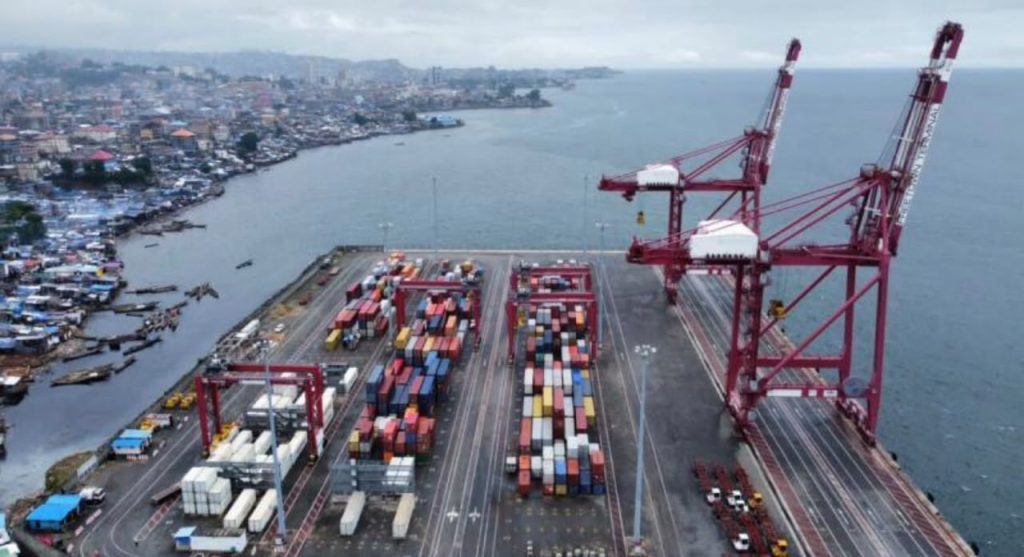
The investigation, based on interviews with intelligence and police sources across two continents, made far-reaching allegations about Leijdekkers’ influence in Sierra Leone. It described alleged links to senior figures, the use of armed enforcers, suspected interference in police investigations, disappearances and killings, and the possible infiltration of institutions involved in port security and law enforcement. Among its most consequential claims was that Leijdekkers’ network had developed significant influence around Freetown’s Queen Elizabeth II Quay.
The report also examined the case of the cargo vessel Arconian. The ship left Freetown in April 2026 and was intercepted by Spanish authorities off the coast of Morocco on 1 May. Investigators found a vast cocaine shipment aboard, with the Guardian reporting between 30 and 45 tonnes of the drug and describing it as the largest cocaine seizure recorded at the time.
The operation also uncovered armed personnel aboard the vessel. The investigation alleged that the shipment was connected to Leijdekkers’ network and that a large quantity of cocaine had been loaded in Freetown.
The report’s account raises serious questions about maritime surveillance, port inspection, vessel registration, customs controls and the ability of criminal networks to exploit international shipping routes. However, the distinction between a seizure and proof of responsibility is important. The interception of a vessel that departed Freetown is a significant law-enforcement event. It does not, on its own, prove that every person or institution named in the Guardian investigation participated in the shipment. The Guardian’s claims about criminal influence, violence and state protection rely substantially on intelligence and police sources, many of whom spoke anonymously. The report says the Sierra Leone Police and military did not respond to questions about some of the alleged incidents. The head of the port, Yankuba Bio, rejected allegations that the port facilitated cocaine exports, describing them as false and without foundation. Leijdekkers’ lawyer also dismissed the allegations as politically driven and denied their credibility.
These denials do not settle the matter. Equally, allegations in an investigative report should not be treated as judicial findings. The appropriate response is an independent, transparent investigation capable of establishing which claims are supported by evidence and who, if anyone, should face prosecution.
The Netherlands, the European Union and Sierra Leone’s response
The diplomatic consequences have become increasingly significant.
The Netherlands has repeatedly asked Sierra Leone to cooperate in securing Leijdekkers’ arrest and extradition. On 2 October 2026, Dutch Justice Minister David van Weel told the Dutch parliament that efforts had been made at multiple levels without achieving the desired result. The Dutch government said it was working with European partners to increase pressure on Sierra Leone and was advocating an EU sanctions framework targeting organised crime. It also welcomed the European Commission’s decision to postpone €18 million in budget support for 2026.
The precise explanation for the delayed EU funding has become disputed.
Dutch officials have presented the suspension as part of pressure on Sierra Leone over the Leijdekkers case. The Sierra Leonean government, however, rejected that interpretation in a clarification issued on 1 October. Information Minister Chernor Bah said the European Commission had communicated the postponement in July, citing procedural difficulties involving an amendment to the financing agreement and the timing of the required approvals.
The government said the delayed payments were being rescheduled and insisted that the decision was not a new punitive measure linked to an individual extradition case. It maintained that judicial cooperation must proceed through national law and due process, and cautioned against using development assistance as leverage. This disagreement deserves to be reported accurately. The Dutch government has openly linked its campaign for extradition to pressure on Sierra Leone, while Freetown says the EU funding delay has a separate technical explanation. The Dutch parliamentary record also acknowledges that the Commission publicly gave technical reasons for the suspension, even as the Netherlands welcomed the decision.
Sierra Leone’s Chief Minister, David Moinina Sengeh, also publicly challenged the Dutch position during a September television interview. He described the pressure as neo-colonial and said the country’s security intelligence did not know Leijdekkers’ whereabouts. He called on the Dutch authorities to provide evidence of his location. The Dutch minister rejected the neo-colonialism accusation and said the extradition process needed to move forward.
The exchange illustrates a genuine diplomatic and legal disagreement. Sierra Leone is a sovereign state, and extradition must comply with its laws and applicable procedures. At the same time, sovereignty does not remove the obligation to cooperate with legitimate international efforts against organised crime.
The public interest is best served by a clear explanation of the legal status of the Dutch request, the steps taken by Sierra Leone’s competent authorities and any outstanding legal obstacles.
The latest major development, as of 5 November 2026, came on 2 November, when the Netherlands Public Prosecution Service announced that it had increased its reward for information leading to Leijdekkers’ arrest from €200,000 to €2 million. The Dutch authorities said they had known since mid-2024 that the fugitive was residing in Sierra Leone. They also said he is known locally by the name Omar Sheriff and that the reward could be paid to anyone whose information makes his arrest possible.
The prosecution service described his arrest as a priority for Dutch investigators and said the search was being conducted with national and international partners. The reward represents a significant escalation in the Dutch effort. It also places further international attention on Sierra Leone’s handling of the case. As of 5 November, the latest information reviewed for this editorial does not establish that Leijdekkers has been arrested or extradited. Nor does the available evidence establish a final outcome to the allegations raised by the Guardian investigation.
It would be a mistake to treat Kush abuse and international cocaine trafficking as identical problems. They involve different markets, supply chains, users and law-enforcement challenges.
Kush is primarily a domestic public-health and social crisis, even though its supply chains may involve organised criminal activity. Cocaine trafficking, by contrast, is an international business involving large shipments, complex financial arrangements, maritime routes and criminal networks that operate across borders.
But the two problems share important institutional concerns. Both require effective policing, intelligence gathering, financial investigations, border control, public accountability and action against suppliers rather than a response focused only on the people who use drugs.
The Guardian’s investigation also raised concerns about cocaine’s growing availability in Freetown, including among sections of the middle class and nightlife community. It cited sources who described low street prices and warned of the potential for increased local consumption and public-health harm.
Those claims deserve attention, but they should not be used to suggest that every person associated with nightlife or wealth is involved in cocaine use or trafficking. A credible national response requires evidence-based policing, not suspicion directed at entire social groups.
The wider regional picture is also important. Criminal networks do not respect national borders. Intelligence and law-enforcement cooperation with Liberia, Guinea, Ghana, Guinea-Bissau, the Netherlands, Belgium, Spain and other affected jurisdictions will be essential if trafficking routes are to be disrupted.
What Sierra Leone must do next
The country now faces a test that goes beyond public statements and isolated arrests. It must demonstrate that its institutions can investigate drug-related crime regardless of the status, wealth, political connections or nationality of the people involved.
First, the government should establish a credible and independent investigative process into the allegations surrounding the Arconian, the reported activities of Leijdekkers and the claims of interference in police and port operations. The investigation should examine shipping records, vessel ownership and registration, cargo manifests, port access logs, customs documentation, financial transactions and the conduct of any public officials whose actions may have enabled criminal activity.
Second, the Netherlands’ extradition request should be addressed transparently through the appropriate legal institutions. The government should explain whether the request is complete, which legal procedures apply, what action has been taken and what obstacles remain. If there are lawful grounds to refuse or delay extradition, those grounds should be explained. If there are no such grounds, the country should not allow an unresolved matter to become a permanent source of diplomatic distrust.
Third, port and maritime security must receive greater attention. The Arconian case demonstrates why vessel tracking, cargo verification, risk-based inspections, beneficial ownership checks and coordination between customs, immigration, police, the military and maritime authorities are essential. A port is an economic asset, but it is also a potential vulnerability if oversight is weak.
Fourth, the domestic Kush response needs stronger public-health infrastructure. The reported rehabilitation figures are encouraging, but they must be accompanied by transparent measures of long-term recovery. More treatment capacity, trained mental-health workers, community-based services, family counselling, prevention programmes in schools and support for recovered users should be part of a sustained national plan.
Fifth, the government must confront the economic and social conditions that make recovery difficult. The IGC findings on peer influence, family damage and unemployment show that rehabilitation cannot be separated from education, skills development and employment. Young people who return to communities without meaningful opportunities may struggle to maintain recovery.
Finally, public accountability must be non-negotiable. Allegations involving police officers, soldiers, customs officials, port personnel or politicians should be investigated on the evidence. If individuals are implicated, they should face due process. If allegations are false, credible investigations should help clear those wrongly accused. Silence and blanket denials do little to restore public confidence.
The national interest must come before political defence
The drug crisis has increasingly become a subject of political argument. Some citizens view the international allegations as evidence of institutional failure, while others believe foreign governments and media organisations are unfairly damaging Sierra Leone’s reputation or applying pressure that would not be tolerated in other countries. Both concerns can be discussed without abandoning the facts.
Sierra Leone has a legitimate interest in defending its sovereignty, challenging inaccurate reporting and ensuring that foreign governments respect its legal institutions. It also has a responsibility to confront credible allegations of organised crime, protect its citizens and cooperate with international partners. Criticism of the government is not automatically an attack on the country. Equally, criticism of foreign reporting should not be dismissed as an attempt to protect criminals. The standard should be evidence, transparency and the rule of law. The same principle applies to the Kush crisis. People suffering from addiction should not be treated as the enemy. The criminal networks supplying dangerous substances, those who profit from trafficking and any officials who facilitate their operations should be the focus of law enforcement. Those struggling with dependency need treatment, protection and a realistic path back into society.
Sierra Leone cannot afford to address the crisis on one front while neglecting the other. Arresting street-level dealers without dismantling supply networks will not solve the problem. Rehabilitating users without preventing the supply of drugs will leave communities exposed. International cooperation without strong domestic institutions will produce limited results.
The government has recorded convictions, established rehabilitation centres and reported that more than 1,000 young people have completed treatment programmes. Those efforts should be recognised. But the scale of the challenge requires more than progress reports. It requires measurable reductions in drug availability, stronger investigations, sustained recovery and public confidence that no individual is beyond the reach of the law.
The Bolle Jos case has become a test of whether Sierra Leone can demonstrate that its institutions are capable of acting independently in the face of powerful international criminal interests. The Kush crisis is an equally urgent test of whether the state can protect a generation from addiction and its consequences. Neither challenge should be reduced to a contest between the government and its critics, or between Sierra Leone and foreign governments.
The real issue is whether Sierra Leone can protect its young people, defend its institutions, enforce its laws and ensure that its territory is not used as a safe passage or operating ground for international criminal networks.