

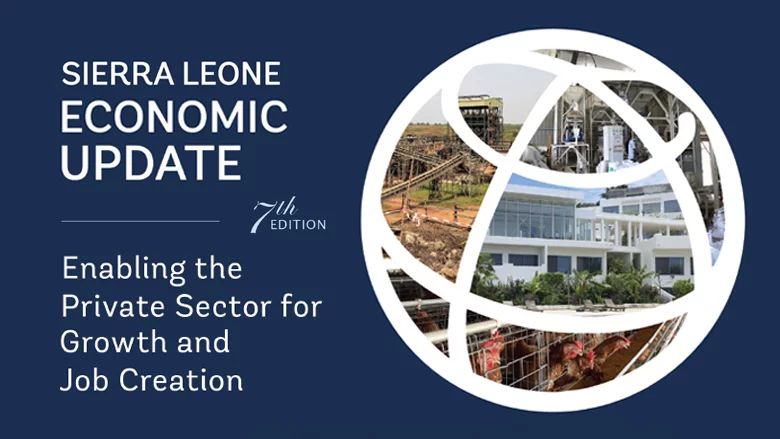
Sierra Leone’s economy is showing renewed stability despite global economic pressures, with GDP growth projected at 4.3 percent in 2025 and rising to 4.6 percent by 2027, according to the latest World Bank Sierra Leone Economic Update released in Freetown.
The positive outlook is driven by expected improvements in agriculture, expansion in mining, and steady performance in services.
The report, titled “Enabling the Private Sector for Growth and Job Creation,” emphasises that while growth prospects are improving, Sierra Leone’s ability to sustain this progress — and create the jobs it urgently needs — depends on unlocking private sector potential.
“Unlocking the potential of the private sector remains critical to diversifying Sierra Leone’s economy and creating more meaningful jobs,” said Abdu Muwonge, World Bank Country Manager for Sierra Leone. “Sustaining the current reform trajectory, restoring macroeconomic stability, improving the investment climate, and strengthening social spending will foster inclusive growth and development.”
The World Bank notes that Sierra Leone needs to generate at least 75,000 new jobs annually just to maintain its current employment-to-population ratio. However, job creation is constrained by weak private sector activity, limited access to finance, challenges in accessing land and electricity, and gaps in skills.
“Revitalizing Sierra Leone’s private sector is essential for unlocking the country’s growth potential and creating more jobs,” said Subika Farazi, a World Bank Senior Economist and co-author of the report. She added that improvements in the regulatory environment and service delivery are needed to build a more competitive business climate that can attract investment.

The report outlines several policy recommendations, including strengthening fiscal management to reduce reliance on domestic debt, simplifying business regulations, improving access to finance, enhancing infrastructure — particularly energy, transport and digital networks — and streamlining foreign direct investment rules and protections.
Michael Saffa, the World Bank Senior Country Economist and lead author of the report, said Sierra Leone’s chances for sustained growth and poverty reduction rest on firm fiscal discipline and private sector-led development.
“Sierra Leone’s prospects for growth depend on strengthening fiscal discipline, improving the business environment, and fostering private sector-led job creation,” he stated.
The Sierra Leone Economic Update is the World Bank’s annual flagship publication tracking economic and social developments in the country. The latest edition notes that fiscal performance in early 2025 met targets due to spending restraint, while tight monetary policy has helped reduce inflation — which fell to 5.4 percent by September 2025. Domestic debt servicing costs have also eased as government borrowing slowed.
However, the report warns that despite progress, Sierra Leone remains at high risk of debt distress and faces declining reserves as external debt servicing costs continue to rise.