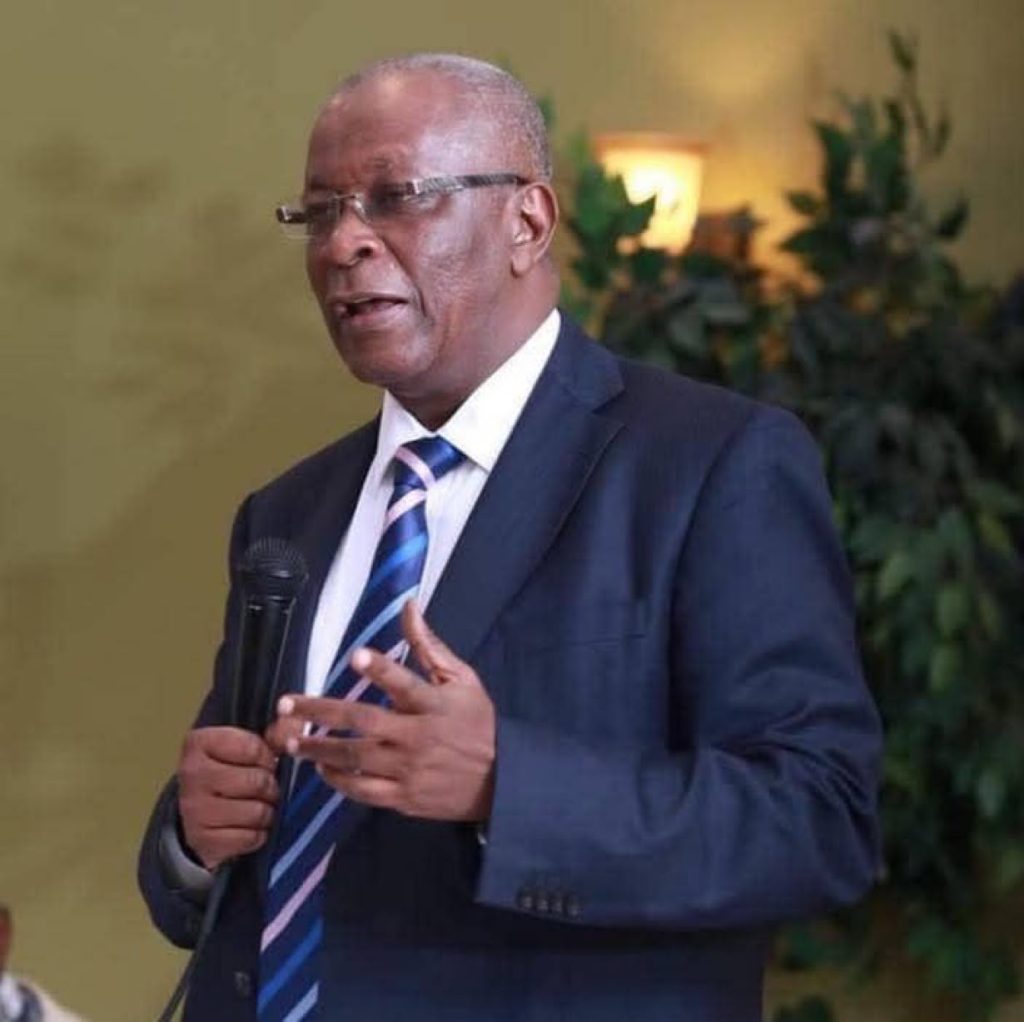
Education commentator Andrew Keili has called for a major rethink of university admission requirements in Sierra Leone, arguing that students who demonstrate strong academic abilities in Mathematics and Science should not be automatically denied higher education opportunities because they fail to obtain a credit pass in English Language.
In his latest edition of Ponder My Thoughts, titled “WASSCE Sings The English Language ‘Anthem’ Of West Africa,” Keili raised concerns over the country’s persistently poor performance in English Language examinations, comparing Sierra Leone’s results with those of Ghana and examining alternative university admission models in South Africa, Rwanda and Nigeria.
His intervention comes amid renewed national debate over the 2026 West African Senior School Certificate Examination (WASSCE) results and the implications of English Language failures for thousands of prospective university students.
Keili cited figures indicating that 63.33 per cent of candidates failed English Language in the 2026 examination, while only 9.77 per cent obtained credit passes between A1 and C6. He also referenced a 62.15 per cent credit-pass rate in Mathematics and an overall performance figure of 81.4 per cent.
Spear News Fact-Check: The English Language Figures

Spear News’ review of the reported 2026 examination statistics found that the 9.77 per cent English Language credit-pass figure and the 62.15 per cent Mathematics credit-pass figure are consistent with figures published following the examination results.
However, the distinction between failing to obtain a credit pass and receiving an outright failing grade is important. Candidates who obtain D7 or E8, for instance, do not qualify for the A1–C6 credit category, but they have not necessarily received F9.
Consequently, describing all candidates outside the credit category as having outright failed the subject would be misleading.
The 81.4 per cent overall performance figure also requires careful interpretation. It should not be presented as the proportion of candidates who passed every subject unless the underlying WAEC methodology establishes that meaning.
Keili further compared Sierra Leone’s performance with Ghana, citing a 62.4 per cent English Language credit-pass rate in Ghana’s 2026 WASSCE.
Spear News found that the Ghanaian figure is consistent with the results reported by the Ghana News Agency. The comparison highlights a substantial difference between the two countries, although the methodology and examination cohorts must be considered when interpreting the figures.
Keili also suggested that Ghana had maintained an average English Language credit-pass rate of approximately 68.5 per cent over four years. While the figure is consistent with a calculation from reported annual results, it should be understood as an independently calculated average rather than an official WAEC four-year statistic.
The UniMak Admission Initiative: A Practical Alternative?
One of the strongest arguments in Keili’s article concerns the University of Makeni’s decision to introduce provisional admission arrangements for candidates who performed well in other subjects but did not meet the English Language requirement.
Keili welcomed the initiative and argued that other universities should consider similar arrangements rather than automatically excluding academically capable students.
Spear News’ fact-check confirms that the University of Makeni approved a special provisional admission arrangement for eligible 2026 WASSCE candidates.
Under the arrangement, candidates with credit passes in at least four other subjects can receive provisional admission, subject to compulsory remedial English classes and the requirement to obtain the necessary English Language pass by October 31, 2028.
However, the arrangement excludes Law and Nursing pending separate guidelines and applies specifically to the 2026 examination cohort.
This means the university has not abolished its English Language requirement. Rather, it has introduced a temporary, conditional pathway that gives eligible students additional time to satisfy the requirement.
The distinction is significant. It demonstrates that universities can explore alternative admission arrangements without abandoning academic standards.
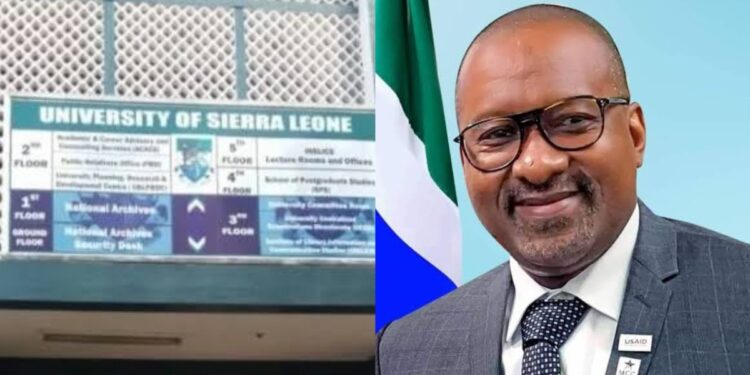
Keili also referred to reported adjustments by the University of Sierra Leone concerning admission requirements for certain courses.
However, Spear News could not independently establish the precise scope of these reported adjustments from an official university decision. The university’s published admissions requirements continue to specify English Language credits for general degree admission. Further clarification is therefore necessary before the reported relaxation can be described as an established policy.
South Africa, Rwanda And Nigeria: How Accurate Are The Comparisons?
In making his case for reform, Keili pointed to South Africa’s Extended Curriculum Programmes (ECPs), which provide additional academic support and extended pathways for students who demonstrate potential but require further academic preparation.
Spear News confirms that such programmes exist at major South African universities, including the University of Cape Town and the University of the Witwatersrand.
However, these programmes are not simply exemptions for science students who fail English Language. They are broader academic development initiatives, with admission requirements and support structures varying across institutions and faculties.
Keili further claimed that students admitted through these programmes have, over a decade, graduated at equal or sometimes higher rates than students admitted through conventional routes.
Spear News could not independently establish this specific graduation comparison from a named research study or university dataset. The claim therefore requires additional evidence before it can be treated as an established outcome.
His reference to Rwanda’s transition towards English as the language of instruction also deserves attention.
Rwanda introduced a major shift towards English in its education system in 2008, with implementation beginning in 2009. The country subsequently introduced a School-Based Mentorship Programme to improve teachers’ English proficiency and classroom delivery.
Spear News confirms the existence of the programme and the broader language transition. However, Rwanda’s policy was not a straightforward replacement of French with English at every level. Kinyarwanda was subsequently reinstated as the language of instruction for the first three years of primary education.
Although Rwanda offers useful lessons in teacher development and language support, Keili’s suggestion that the country’s technology-driven economy emerged directly from admitting technically capable students despite their English deficiencies is not established by the evidence reviewed.
The article also references Nigeria’s Interim Joint Matriculation Board (IJMB) programme as an alternative route for students who fail to meet conventional university admission requirements.
Spear News found this comparison potentially misleading. IJMB is primarily an advanced-level qualification route for university admission through Direct Entry, and its ordinary entry requirements commonly include English Language and Mathematics credits.
Nigeria does, however, operate remedial and foundation programmes through which eligible students can receive additional academic preparation and subsequently meet outstanding admission requirements.
These programmes provide a more accurate comparison with the type of conditional admission arrangement Keili is proposing for Sierra Leone.
The Foundational Literacy Problem
Beyond university admission, Keili argued that Sierra Leone’s English Language crisis reflects deeper weaknesses in foundational literacy, teacher preparation and the country’s reading culture.
He referenced government interventions, including the Partnership Compact, teacher training, specialised English lesson plans and digital learning initiatives.
Spear News confirms that foundational literacy and numeracy are major priorities under Sierra Leone’s education reform framework, particularly the emphasis on improving children’s reading and numeracy competencies in the early primary years.
However, while the broader policy direction is documented, the precise implementation scale and outcomes of every intervention mentioned by Keili could not be independently established.
The distinction between announcing an intervention and demonstrating measurable results is important. Government agencies must provide transparent information on implementation, coverage, funding and improvements in students’ reading proficiency.
Keili also rejected calls for the removal of Basic and Senior Secondary Education Minister Conrad Sackey, arguing that replacing the minister would not independently resolve structural weaknesses in the education system.
His position raises a wider question about the relationship between political accountability and long-term educational reform.
While structural literacy challenges cannot reasonably be attributed to one minister alone, the Ministry must remain accountable for measurable progress, effective implementation and transparent reporting.
A National Debate Beyond Examination Results
At the heart of Keili’s argument is whether Sierra Leone should continue using English Language credit passes as an absolute barrier to university admission, even when candidates demonstrate strong abilities in other academic disciplines.
He proposed structured provisional admission and remedial programmes that would allow students to begin their university education while undertaking compulsory academic English training.
The proposal presents an important policy consideration for the Ministry of Technical and Higher Education, MBSSE, WAEC and universities across the country.
Such a framework could include conditional admission, compulsory academic literacy courses, regular assessments and clearly defined deadlines for meeting the required English Language standard.
It would also require safeguards to ensure that students in professional disciplines such as Medicine, Law and Engineering acquire the communication and comprehension skills necessary for their respective fields.
The debate should therefore not be reduced to whether English Language requirements should be abolished or retained. Rather, it should examine how the country can maintain academic standards while providing fair opportunities for students whose abilities may not be adequately reflected by one examination result.
Sierra Leone’s English Language performance presents a serious challenge, but the response must go beyond blaming students, teachers, parents or political officeholders.
As Keili argues, the country must confront the underlying weaknesses in its education system. However, any proposed solution must also be supported by credible evidence, effective implementation and measurable outcomes.
The central question remains whether Sierra Leone’s universities can develop admission pathways that protect academic standards without unnecessarily shutting out students with demonstrable academic potential.