

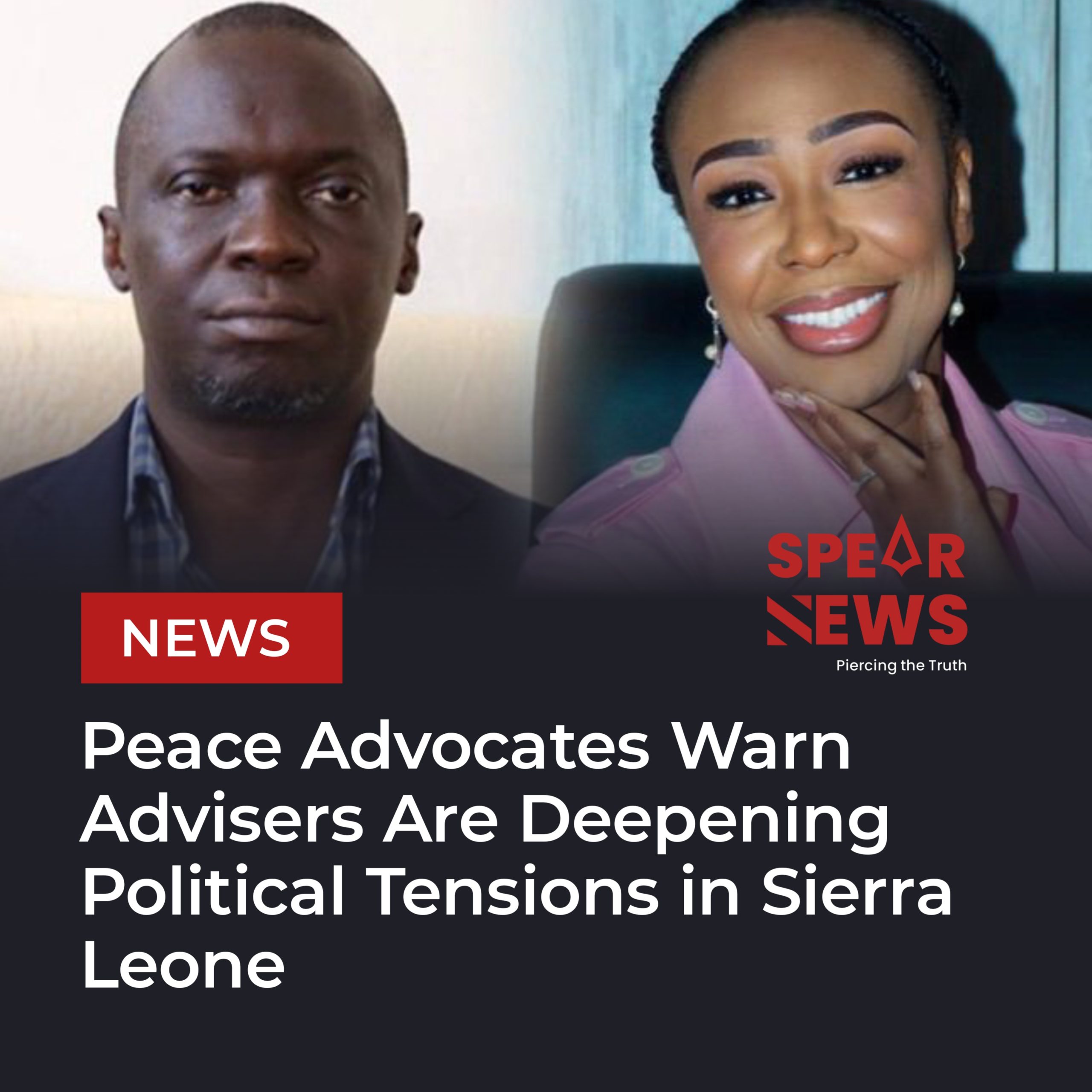
The Executive Director of Fambul Tok, John Caulker, has raised concerns about the influence of advisers surrounding both the government and opposition in Sierra Leone, warning that their actions may be worsening the country’s current political tensions.
Speaking on the state of national unity, Caulker criticised advisers close to President Julius Maada Bio as well as those around opposition leaders, saying their conduct is not helping to calm the growing divisions within the country’s political environment.
He warned that personal interests among political actors are becoming an increasing obstacle to stability and urged leaders across the political spectrum to prioritise the preservation of peace.
According to Caulker, the peace Sierra Leone currently enjoys remains its most valuable national asset, particularly given the sacrifices many citizens made to restore stability after years of conflict.
“The greatest treasure we have as a country is the peace which most people have sacrificed so much for,” Caulker said.

He also suggested that the President should have more opportunities to engage directly with ordinary citizens without the heavy layers of political mediation and security restrictions that often surround high-level leaders.
Caulker expressed hope that those advising the President would allow him greater freedom to move around the country and interact directly with communities in order to better understand the realities people face.
“I hope the advisers around President Julius Maada Bio will give him a little breather to go around, avoid these too many securities, and talk one-on-one to the people to get the real feeling of what is happening down there,” he said.
Meanwhile, the Executive Secretary of the Independent Commission for Peace and National Cohesion, Hawa Sally Samai, emphasised that sustained dialogue between the government and the country’s main opposition party, the All People’s Congress, remains essential to resolving ongoing political disagreements.
Samai noted that one of the challenges undermining efforts to ease tensions has been the lack of consistent and structured communication between the two sides.
According to her, the opposition has at times chosen to express grievances through social media rather than presenting them through formal channels, a situation she believes complicates efforts to build constructive engagement.
She also pointed to deeper structural issues that continue to influence the country’s political environment, including self-interest, greed, and corruption. These concerns, she said, were previously highlighted in the findings of Sierra Leone’s Truth and Reconciliation Commission and remain challenges that require continued attention.
“Our goals should be how we make Sierra Leone a better place,” Samai stated.
She further explained that while the government has indicated that certain recommendations arising from previous political agreements are either being implemented or are still in progress, the opposition maintains that it has not been fully informed about some of these developments.
Samai stressed that meaningful progress will depend not only on dialogue but also on practical steps taken by both the government and opposition to address the issues raised.
According to her, rebuilding trust between the two sides will require transparency, open communication, and a clear commitment to implementing agreed measures that promote stability and national cohesion across Sierra Leone.