

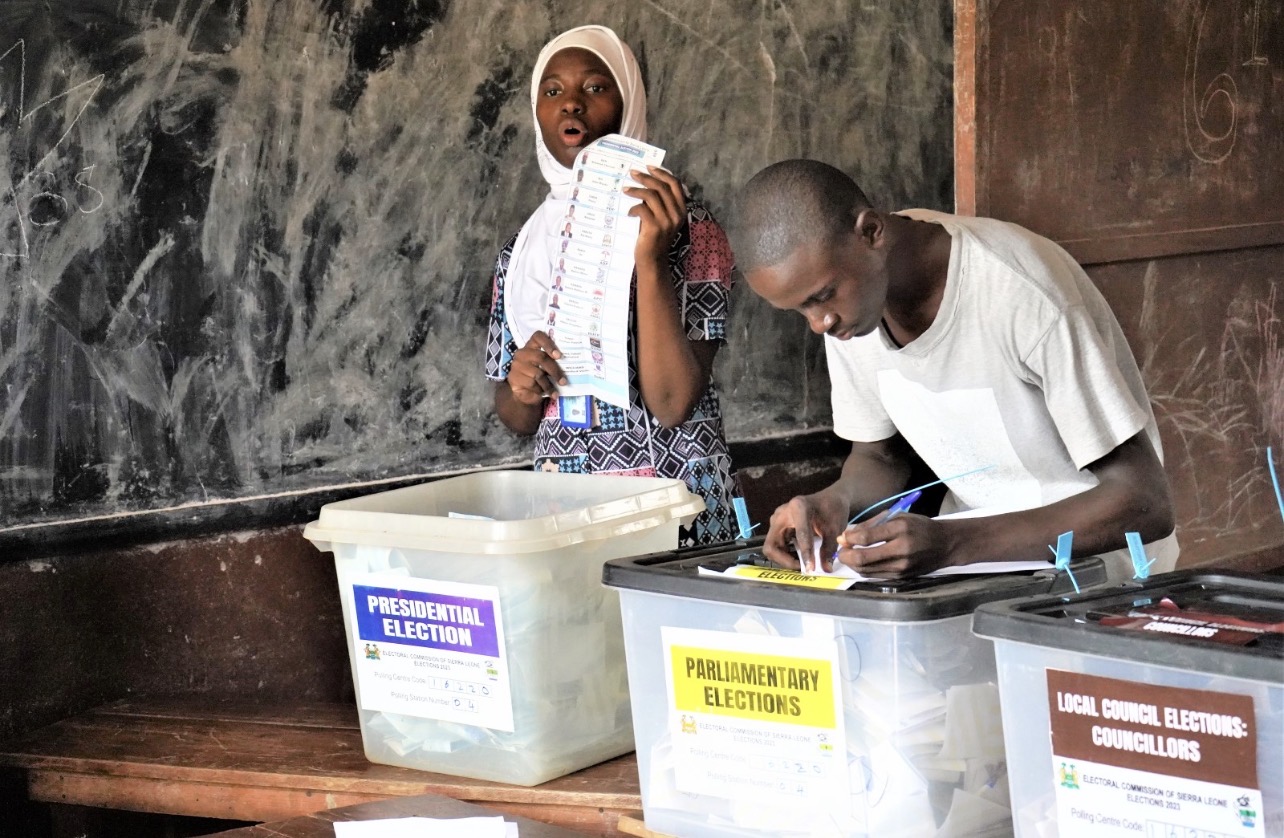
The Inter-Religious Council of Sierra Leone has officially backed the First-Past-The-Post (FPTP) electoral system, declaring it the most appropriate model for the country’s democratic framework as debates on electoral reforms intensify ahead of the 2028 general elections. In a position paper released on March 12, 2026, the council stated that after extensive consultations and deliberations, it believes the FPTP system aligns best with the political, social, and democratic realities of Sierra Leone.
The council explained that its decision followed engagements with civil society organisations, religious leaders, and discussions facilitated by the Tripartite Committee and the International Institute for Democracy and Electoral Assistance (International IDEA). Under the FPTP system, the candidate who secures the highest number of votes in a constituency wins the parliamentary seat. The council emphasized that the system strengthens democracy by enabling voters to elect individual representatives who remain directly accountable to their communities.
Highlighting its simplicity and transparency, the council noted that FPTP’s familiarity encourages wider participation, particularly in areas where many citizens have limited formal education. It also pointed to the system’s history of producing stable governments capable of decisive action, an attribute deemed essential for maintaining peace and supporting national development.
While acknowledging the benefits of proportional representation (PR), particularly in enhancing political inclusion and ensuring parliamentary seats reflect vote shares, the council warned that PR could weaken the direct relationship between voters and constituency representatives, increase party elites’ influence in candidate selection, and potentially confuse voters due to its complexity.
Despite its support for FPTP, the council recommended targeted reforms to mitigate its limitations, including the risk of under-representation of smaller political parties and minority groups. Proposals include introducing reserved seats or quotas to improve representation for women, youth, and persons with disabilities, as well as strengthening internal democratic processes within political parties. The council also called for enhanced civic education, inter-party dialogue, and peace messaging during elections, underscoring the role of religious leaders in promoting unity and stability.
“We remain committed to working with electoral bodies, political parties, civil society, and international partners to uphold democracy, peace, and justice in Sierra Leone,” the council said.

The debate over Sierra Leone’s electoral system has gained momentum in recent months following recommendations in the Tripartite Report calling for a review of the country’s electoral framework. Recent findings indicate that 57.9 percent of civil society organisations support retaining the FPTP system for its transparency and direct representation, while the government has faced criticism over reported considerations to adopt proportional representation, which opponents argue could lack transparency and potentially advantage the ruling party following the contested 2023 elections.