

The Government of Sierra Leone has approved a standardized academic calendar for all accredited higher education institutions across the country, with implementation scheduled to begin from the October 2026/2027 academic session.
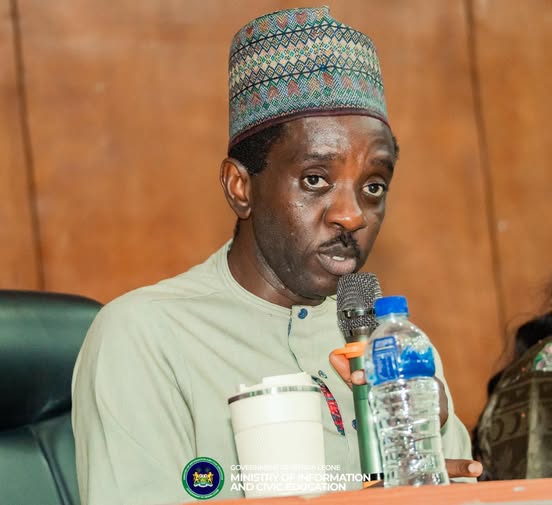
The announcement was made by the Minister of Information and Civic Education, Chernor Bah, during the Government’s weekly press briefing held on Tuesday, May 12, 2026, at the Youyi Building in Freetown.
According to the Minister, the policy received cabinet approval as part of ongoing reforms aimed at improving coordination, consistency, and efficiency within the country’s higher education sector.
Bah explained that the responsibility for enforcing the unified calendar rests with the Ministry of Technical and Higher Education under the leadership of Haja Ramatulai Wurie.
“The Government, through the Ministry of Technical and Higher Education, has enforced the calendar so that all institutions are supposed to stick within the calendar,” he stated.

Under the newly approved structure, academic activities for universities and other accredited tertiary institutions will officially commence in October, while all teaching, examinations, and related academic exercises are expected to conclude no later than July 31 each year.
Government officials say the move is intended to address irregular academic schedules that have affected institutions over the years and to establish a more predictable and coordinated education system nationwide.
As part of the broader reforms in the education sector, Deputy Minister of Technical and Higher Education, Sarjoh Aziz-Kamara, disclosed that the government is also considering the introduction of a centralized university admission system similar to Nigeria’s Joint Admissions and Matriculation Board.
Speaking during a policy engagement in Abuja, Aziz-Kamara noted that the proposed system would improve admission coordination and strengthen institutional capacity within Sierra Leone’s higher education framework.
According to him, the reforms are designed to reduce pressure on the West African Examinations Council while expanding opportunities and access for students across the country.
The government says the latest reforms form part of its broader human capital development agenda focused on improving education standards, institutional management, and access to quality higher education nationwide.