

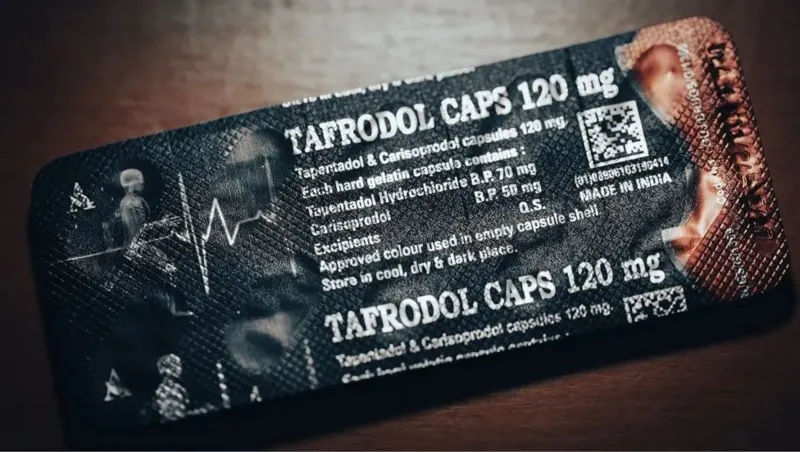

A major investigation by Agence France-Presse has uncovered how powerful opioid drugs manufactured by several Indian pharmaceutical companies are worsening the growing drug crisis across West Africa, particularly in Sierra Leone, where the dangerous synthetic drug known as kush continues to devastate communities.
The report revealed that millions of high-strength tapentadol tablets are being exported from India into West African countries despite increasing concerns from health experts, anti-drug agencies, and governments over addiction, mental health breakdowns, and rising deaths linked to opioid abuse.
Tapentadol, a synthetic opioid stronger than tramadol, is commonly sold in blister packs through roadside kiosks, informal drug stores, and unauthorized pharmacies across several African countries.
Although the medication is designed for pain management under strict medical supervision, experts say the version flooding African markets is often produced in dangerously high doses not approved in many parts of the world.Investigators found that these opioids are now being mixed into kush, the highly addictive street drug that has triggered a public health emergency in Sierra Leone and Liberia.Kush, widely referred to as a “zombie drug,” has become notorious for destroying the mental and physical health of users at alarming speed.
Videos and images circulating across social media have shown addicts wandering through streets in unstable conditions, collapsing in public spaces, and suffering severe psychological episodes.Mental health authorities in Sierra Leone say the situation has reached dangerous levels.

Ansu Konneh, who heads mental health services under the Ministry of Social Welfare, described the growing use of tapentadol in kush production as “extremely alarming.
”According to him, authorities in Freetown have been forced to recover bodies from streets, slum communities, and marketplaces almost daily due to the impact of substance abuse and addiction.
He disclosed that more than 400 bodies were reportedly collected within a three-month period in the capital alone, reflecting the scale of the crisis currently confronting the country.
Public health researcher Ronald Abu Bangura also confirmed that drug dealers and users increasingly crush and mix tapentadol tablets with kush to increase its potency and addictive effect.
Health workers and rehabilitation operators say the drug mixture has become common among young people, including students and unemployed youths struggling with poverty, trauma, and economic hardship.
The AFP investigation further traced several shipments of the opioids directly to pharmaceutical manufacturers in India.Companies named in export and seizure records include Gujarat Pharmaceuticals, Merit Organics, McW Healthcare, PRG Pharma, and Syncom Formulations.
According to the report, some of the shipments were labelled as “Harmless Medicines for Human Consumption,” despite containing highly potent opioid substancesInvestigators matched manufacturing licence numbers found on seized tablets in countries including Sierra Leone, Guinea, Senegal, and Nigeria with export records from Indian pharmaceutical firms.
The report stated that large quantities of the drugs continued entering African markets even after Indian authorities announced a “zero-tolerance” policy against illegal opioid exports in February 2025.
India’s drug regulator, the Central Drugs Standard Control Organisation, had earlier announced restrictions on certain opioid exports following international criticism over the role Indian-made drugs were playing in Africa’s growing addiction crisis.
However, researchers argue that while some mixed opioid products were restricted, exports of pure high-strength tapentadol tablets continued largely unchecked.
Anti-drug officials across West Africa say opioids have become deeply embedded within criminal networks and vulnerable communities.
Nigeria’s National Drug Law Enforcement Agency disclosed that approximately two billion opioid tablets were seized between 2023 and 2024 alone.
NDLEA spokesperson Femi Babafemi warned that the drugs are not only abused by civilians but are also consumed by kidnappers, armed gangs, and terrorist groups to increase endurance and suppress fear during violent operations.
Experts also noted that many ordinary laborers use the drugs as stimulants to cope with physically demanding jobs and harsh living conditions.
Commercial motorbike riders, miners, market porters, and manual laborers across West Africa reportedly consume the opioids to stay awake for long hours, suppress hunger, and continue working despite exhaustion and pain.
Medical anthropologist Axel Klein explained that the drugs are often marketed to appear like normal medicines, making it easier for users to underestimate their dangers.
International drug policy experts say weak regulation, porous borders, poor enforcement systems, and widespread poverty have created ideal conditions for illegal opioid trafficking across the region.
Vanda Felbab-Brown warned that Africa has increasingly become a target market for pharmaceutical companies seeking to distribute products that face tighter restrictions in Europe and North America.
She argued that inadequate oversight and weak legal consequences have created “a sense of impunity” among exporters flooding African markets with dangerous opioid products.
Meanwhile, Sierra Leone’s Health Minister, Austin Demby, reiterated that only medically approved low-dose tramadol administered within recognized health facilities remains legal in the country.“Anything outside of that is illegal,” the Minister stressed.
Authorities also expressed concern over the growing number of children and teenagers now abusing the drugs.
Mental health officials warned that some primary school pupils and university students are reportedly mixing crushed tapentadol with energy drinks and kush to intensify its effects.
Rehabilitation centers and informal detox facilities across Sierra Leone continue to struggle with overcrowding as addiction rates rise.
In several communities outside Freetown, families desperate to save addicted relatives have resorted to sending them to informal rehabilitation homes where patients are sometimes chained for months during withdrawal treatment.
Health experts are now calling for urgent regional cooperation, tighter pharmaceutical regulations, improved border surveillance, and stronger investment in mental health and rehabilitation services to prevent the opioid crisis from escalating further across West Africa.