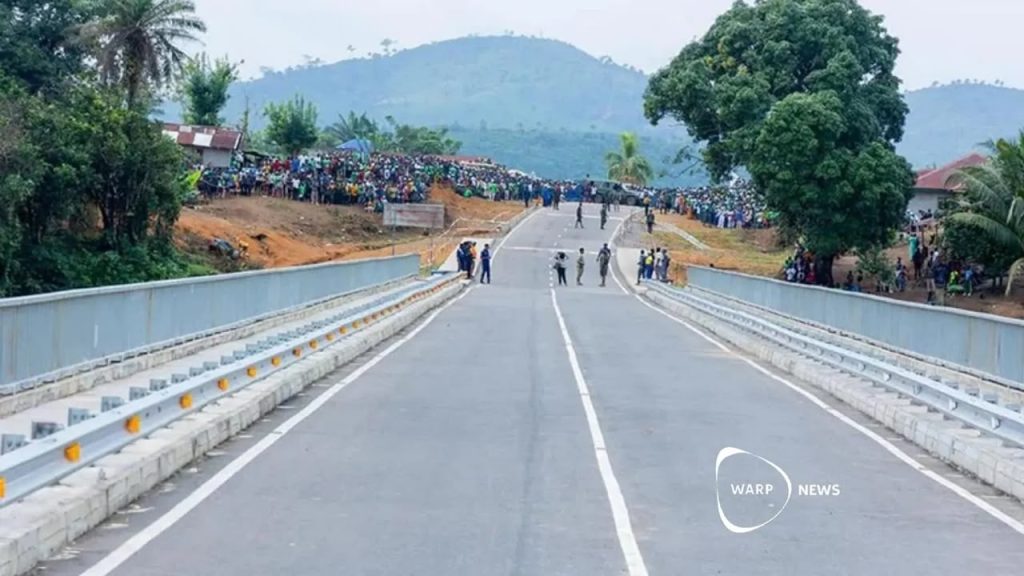

A new bridge over the Sewa River in southern Sierra Leone has reduced a journey that once took up to half a day to about five minutes by road, improving access to markets, schools and other essential services for rural communities.
The 125-metre Gendema Bridge, commissioned by President Julius Maada Bio in November 2025, replaced an ageing hand-pulled ferry that had served communities for more than 50 years.
The bridge connects communities in Simbaru, Wando, Gorama Mende and Konike Sanda chiefdoms, providing a year-round crossing over the river.
For decades, residents relied on the ferry, which was often slow, unreliable and difficult to operate during the rainy season. Delays affected farmers transporting produce to markets, with some crops reportedly spoiling before reaching buyers.
The World Bank said the bridge was expected to improve farmers’ access to markets, reduce transport costs and make journeys safer for residents, including schoolchildren and traders.

The project forms part of the Smallholders Commercialisation and Agribusiness Development Project (SCADeP), supported by the World Bank and implemented with the Government of Sierra Leone.
It is also part of a wider infrastructure programme aimed at replacing unsafe ferry crossings with bridges to improve rural connectivity and agricultural trade.
The government has identified improved transport links as a key part of its Feed Salone strategy, which seeks to strengthen domestic food production and connect farmers to markets.
In June 2026, President Bio commissioned the Manowa Bridge over the Moa River in Kailahun District. The government said the bridge was among four completed under the SCADeP programme, alongside Gendema, Mattru-Senehun and Tomparie.
Separately, the government signed contracts in October for four additional bridges at Komrabai, Kabba, Sumbuya and Moselolo under the World Bank-funded Sierra Leone Connectivity and Agricultural Market Infrastructure Project.
The projects are intended to improve access to markets and essential services in rural areas, where poor transport infrastructure has long restricted economic activity.