

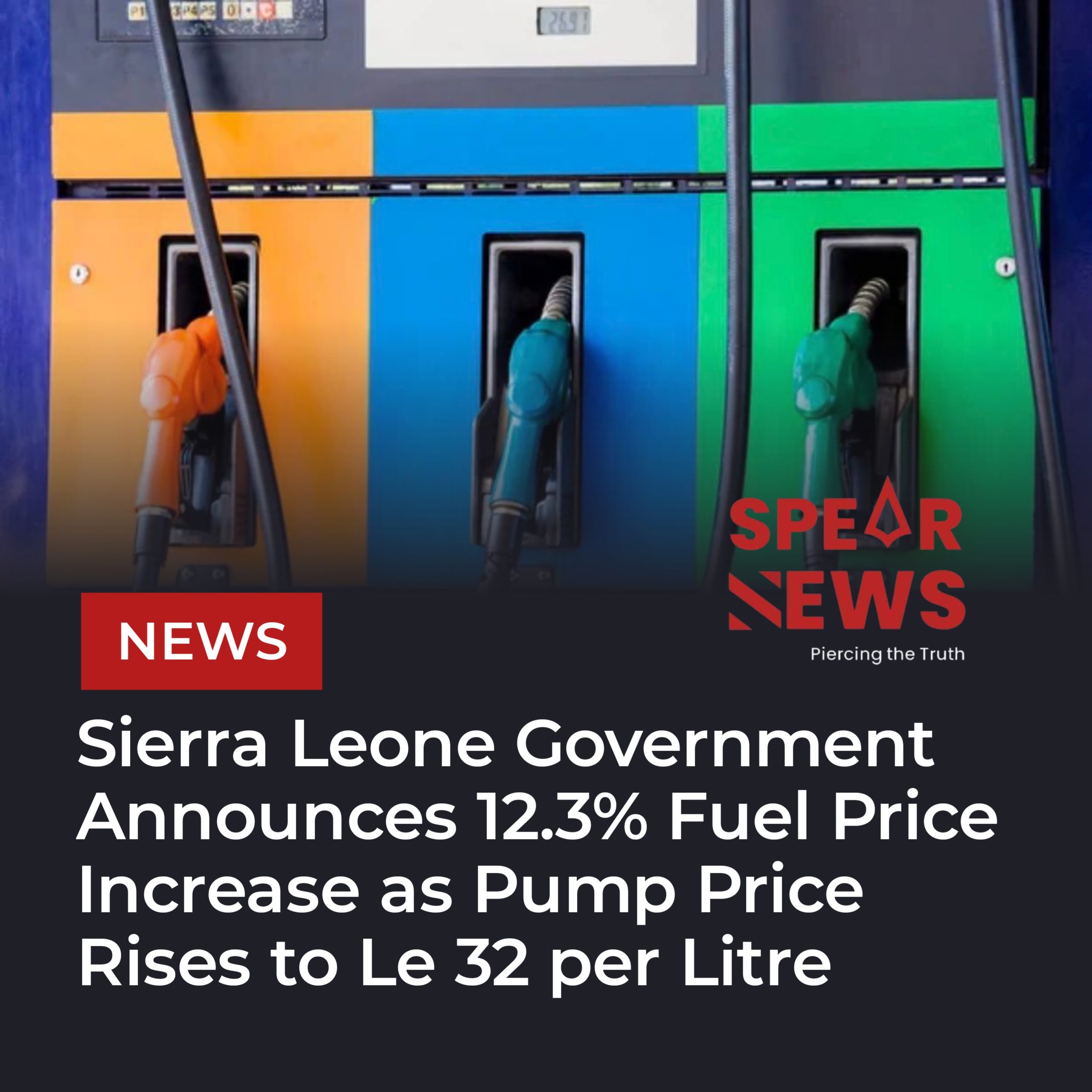
The Government of Sierra Leone has announced a 12.3 percent increase in the retail price of fuel, raising the pump price of petrol and diesel to Le 32.00 per litre under the latest review of the country’s petroleum pricing structure.
The adjustment was announced through the National Petroleum Regulatory Authority(NPRA), the government agency responsible for regulating petroleum pricing and supply across the country.
According to the updated pricing template released by the regulator, the new fuel prices took effect on March 7, 2026, marking one of the latest adjustments in the government’s periodic review of petroleum costs.
Under the revised pricing structure, petrol and diesel will now sell at Le 32.00 per litre, while kerosene will retail at approximately Le 28.03 per litre, and fuel oil at about Le 26.73 per litre.
Authorities say the increase reflects changing global and domestic economic conditions affecting the cost of importing refined petroleum products into the country.
The NPRA noted that the new price adjustment was influenced by several factors, including rising international crude oil prices, increased freight and insurance costs, exchange-rate fluctuations, and other import-related charges associated with bringing petroleum products into Sierra Leone.

Like many fuel-importing countries, Sierra Leone operates a cost-reflective or “full pass-through” pricing system, which means that local pump prices are periodically adjusted to reflect the actual cost of importing and distributing petroleum products.
Under this system, global oil market movements, shipping expenses, port charges, and the value of the local currency against the US dollar can directly affect domestic fuel prices.
Fuel price increases often have wider economic implications, particularly in countries where transportation and power generation rely heavily on petrol and diesel.
Analysts say the latest adjustment could trigger higher transportation fares, increased distribution costs for goods, and possible upward pressure on food prices, as transporters and businesses adjust to the higher operating costs.
For many households and small businesses in Sierra Leone, fuel remains a critical resource not only for transportation but also for electricity generation, especially in areas where access to stable power supply is limited.
As a result, changes in fuel prices can quickly translate into higher living costs across multiple sectors of the economy.
While the government maintains that the adjustment is necessary to keep fuel supply stable and aligned with global pricing realities, fuel price hikes in Sierra Leone have historically generated public debate due to their impact on everyday expenses.
Economic observers say the challenge for authorities will be balancing the need for market-based pricing with measures that cushion vulnerable citizens from rising costs of living.
For now, the new pump price of Le 32 per litre is expected to remain in effect until the next petroleum pricing review conducted by the National Petroleum Regulatory Authority.