

Just forty-eight hours before the Government of Sierra Leone announced the discontinuance of treason charges against former President Dr. Ernest Bai Koroma, one political voice was already urging the nation to look beyond division and embrace reconciliation.
That voice belonged to Dr. Ibrahim Bangura.
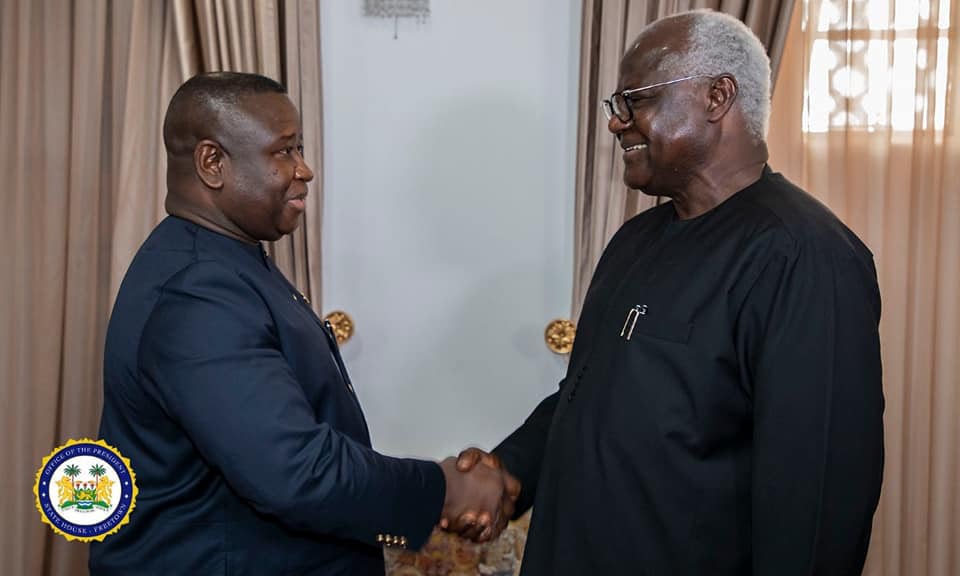
In what many dismissed as an ambitious appeal, the APC presidential aspirant called on President Julius Maada Bio and former President Ernest Bai Koroma to place Sierra Leone above politics by embracing reconciliation and national unity. His message was simple but profound: no nation can truly prosper when its most influential political leaders remain symbols of division rather than partners in peace.
Barely a day later, the political atmosphere shifted dramatically.
The Attorney-General announced that all criminal proceedings against former President Koroma had been discontinued, effectively ending one of the most controversial legal battles in Sierra Leone’s democratic history and clearing the way for the former President’s return home after more than two years abroad.

While there is no evidence that Dr. Bangura’s statement influenced the government’s decision, the timing has inevitably drawn attention to the consistency of his message. Long before today’s announcement, he had argued that Sierra Leone’s future depends not on perpetual political confrontation but on reconciliation, dialogue and national cohesion.
For many Sierra Leoneans, today’s development represents more than the withdrawal of criminal charges. It presents an opportunity to lower political temperatures and begin rebuilding trust across party lines after years of polarization following the 2023 elections and the November 26 security crisis.
Dr. Bangura has repeatedly maintained that no democracy becomes stronger through endless political hostility. Rather, he has argued that the country’s greatest victories will come when leaders demonstrate the courage to forgive, unite and work together in the national interest.
Whether today’s decision becomes the first step toward genuine reconciliation now depends on the willingness of all political actors to seize the moment.
If former President Koroma returns home in the coming weeks, many Sierra Leoneans will be looking beyond the legal implications. They will be watching closely to see whether this moment can evolve into something much larger—a new chapter defined not by accusations and political rivalry, but by dialogue, healing and national unity.
For Dr. Ibrahim Bangura, that has been the message all along. And as Sierra Leone enters what could become a defining moment in its democratic journey, that message has become more relevant than ever.