

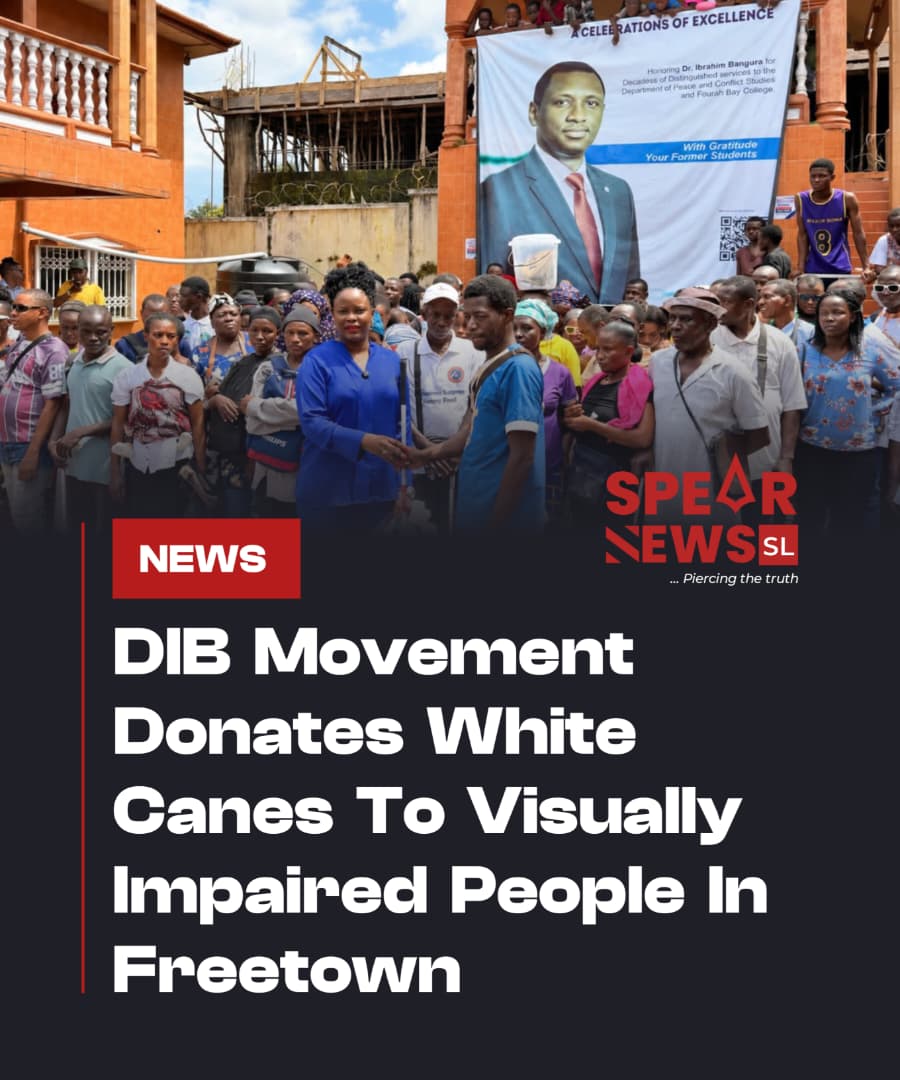

The DIB Movement has donated white canes to visually impaired people in Freetown as part of an initiative to promote mobility, dignity and inclusion, alongside the launch of the Forward and Progressive Visionaries for Dr. Ibrahim Bangura.
The event, held on Wednesday, October 15, coincided with the International White Cane Safety Day, which highlights the importance of white canes in supporting the independence, mobility and safety of people who are blind or visually impaired.
The initiative brought together members of the visually impaired community, representatives of the DIB Movement and other stakeholders, with beneficiaries receiving white canes intended to assist their daily movement and navigation.
The donation was funded by the DIB Movement’s UK/I Chapter, according to an account of the event by Cornelius Oguntola Melvin Deveaux. The initiative followed an appeal for assistance from members of the visually impaired community, highlighting the role of engagement with affected groups in identifying practical needs.

Paul Charles, the group’s representative and public relations officer, said he was motivated to seek support after an experience in Kenya, where someone asked him for his white cane and he had none to offer. He subsequently recognised that access to white canes was also a need within the visually impaired community in Sierra Leone and reached out to the DIB Movement for assistance.
The launch of the Forward and Progressive Visionaries for DIB provided a platform for members of the community to organise under a common structure and advocate for greater recognition and inclusion.
Former Deputy Minister of Sports, Al Ishmael Al Sankoh Conteh, who chaired the programme, called for a more inclusive society in which people with disabilities are not left behind.
“No one shall be left behind in the march toward a brighter and more inclusive future,” Conteh said, emphasising the importance of equity, social justice and collective responsibility.
Speaking on behalf of the DIB Movement’s National Secretariat, Hon. Nuru Deen Sakoh Yillah said the initiative reflected the movement’s stated commitment to inclusivity and empowerment. He said supporting people with visual impairments was important to ensuring that persons with disabilities could participate meaningfully in society.
Paul Charles also expressed appreciation for the support, describing the distribution as a practical step towards addressing mobility challenges faced by members of the community.
The programme featured the presentation of white canes to beneficiaries, many of whom attended with mobility aids and gathered for the launch and associated proceedings.
An account of the event by Deveaux indicated that more than 100 visually impaired men and women attended the programme, reflecting substantial participation by the intended beneficiaries.
While the donation provides immediate assistance to recipients, the broader challenge of disability inclusion extends beyond access to mobility aids. Sustained attention to accessible public infrastructure, inclusive education, employment opportunities and affordable eye-care services remains important to improving the quality of life of people with visual impairments.
The initiative places the needs of a frequently marginalised group within a wider discussion about participation, accessibility and equal opportunities in Sierra Leone.
For the DIB Movement, the launch of the Forward and Progressive Visionaries for DIB and the distribution of white canes represent an effort to connect its stated commitment to inclusion with practical support for members of the community.