

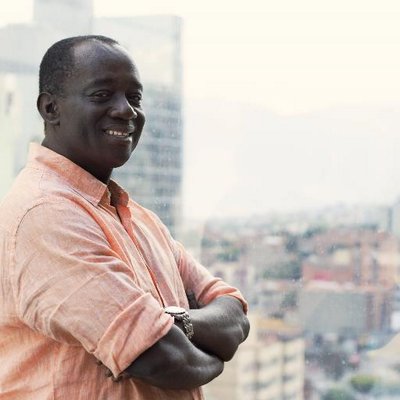
By Oumar Farouk Sesay

A nation is more than its borders. It is also its bloodstream—an inheritance of intelligence, rhythm, daring, and the stubborn capacity to begin again. Sierra Leone has never lacked this inheritance. From early scholars like Davidson Nicol, who rose through discipline and hunger, to a new generation excelling across film, medicine, law, academia, technology, sport, and music, the evidence is clear: Sierra Leone carries a lineage capable of producing greatness.
Yet, an uncomfortable pattern continues to shadow that proof.
Too often, Sierra Leoneans reach the height of their potential only outside the country.
Success is frequently recognised when it returns shaped by foreign systems—better schools, stronger creative industries, reliable infrastructure, deeper funding, and more structured institutions. The nation celebrates these achievements, sometimes loudly, sometimes with quiet pride. But beneath that celebration lies a persistent question:
Why must Sierra Leonean excellence migrate in order to fully bloom?

Across the world, Sierra Leoneans are making their mark. Scholars are shaping universities abroad. Medical professionals are strengthening health systems. Lawyers and policymakers are influencing governance. Tech experts are building the future from global hubs. In the arts, musicians, filmmakers, and writers continue to tell stories rooted in home, while athletes convert raw talent into global recognition.
Global figures such as Idris Elba stand as symbols of what is consistently proven: the issue is not a lack of talent, but a lack of conditions.
Because greatness is not just a gift—it is a system.
A nation may possess seeds of brilliance in abundance, yet still struggle to harvest results if the environment is not supportive. Sierra Leone’s strength lies in its people—in children who show early promise, in youths with instinctive talent, in thinkers who question beyond their years. But talent alone is only a beginning.
Excellence requires structure—quality education, access to tools, mentorship, stability, and opportunity. Without these, potential is not destroyed overnight; it is slowly reshaped into survival.
The challenge begins in classrooms lacking adequate resources, continues in creative spaces without infrastructure, and extends into sports where talent exists without the systems needed to refine it. Even beyond these visible gaps, there are deeper systemic issues: inconsistent power supply, weak institutional frameworks, and limited merit-based opportunities.
In such an environment, brilliance is forced to battle obstacles unrelated to its potential.
Over time, the country risks becoming a waiting ground—where ambition is tied to departure. Success begins to point outward, as scholarships, careers, and platforms are sought abroad. By the time achievement arrives, it often bears the imprint of another nation’s investment.
This dual reality makes diaspora success both a source of pride and a point of reflection. It demonstrates what Sierra Leoneans can achieve—while highlighting what remains underdeveloped at home.
Still, there are examples of progress. Institutions like Ballanta Academy of Music and initiatives such as Mohamed Kallon Football Academy show what is possible when talent is intentionally nurtured.
But these efforts, while impactful, are not yet enough.
What is needed is a deliberate, measurable national strategy—one that prioritises talent development as a core investment. A proposed framework such as a Talent and Excellence Fund, built on the principles of finding, funding, and forging talent, could serve as a foundation. By identifying talent early, supporting it transparently, and developing it through structured centres of excellence, Sierra Leone can begin to build the conditions it currently lacks.
This is not an act of charity—it is a long-term strategy.
Talent development strengthens every sector: healthcare, engineering, governance, innovation, and the arts. A nation that consistently develops its people builds its own solutions rather than relying on external ones.
The question, then, is not whether Sierra Leone has the potential—it does. History and the global stage continue to affirm it.
The real question is whether the country will create an environment where that potential can thrive without needing to leave.
Sierra Leone already has the seeds. The world sees them. The diaspora proves them.
The future depends on whether the nation can finally build the conditions to grow them at home.