

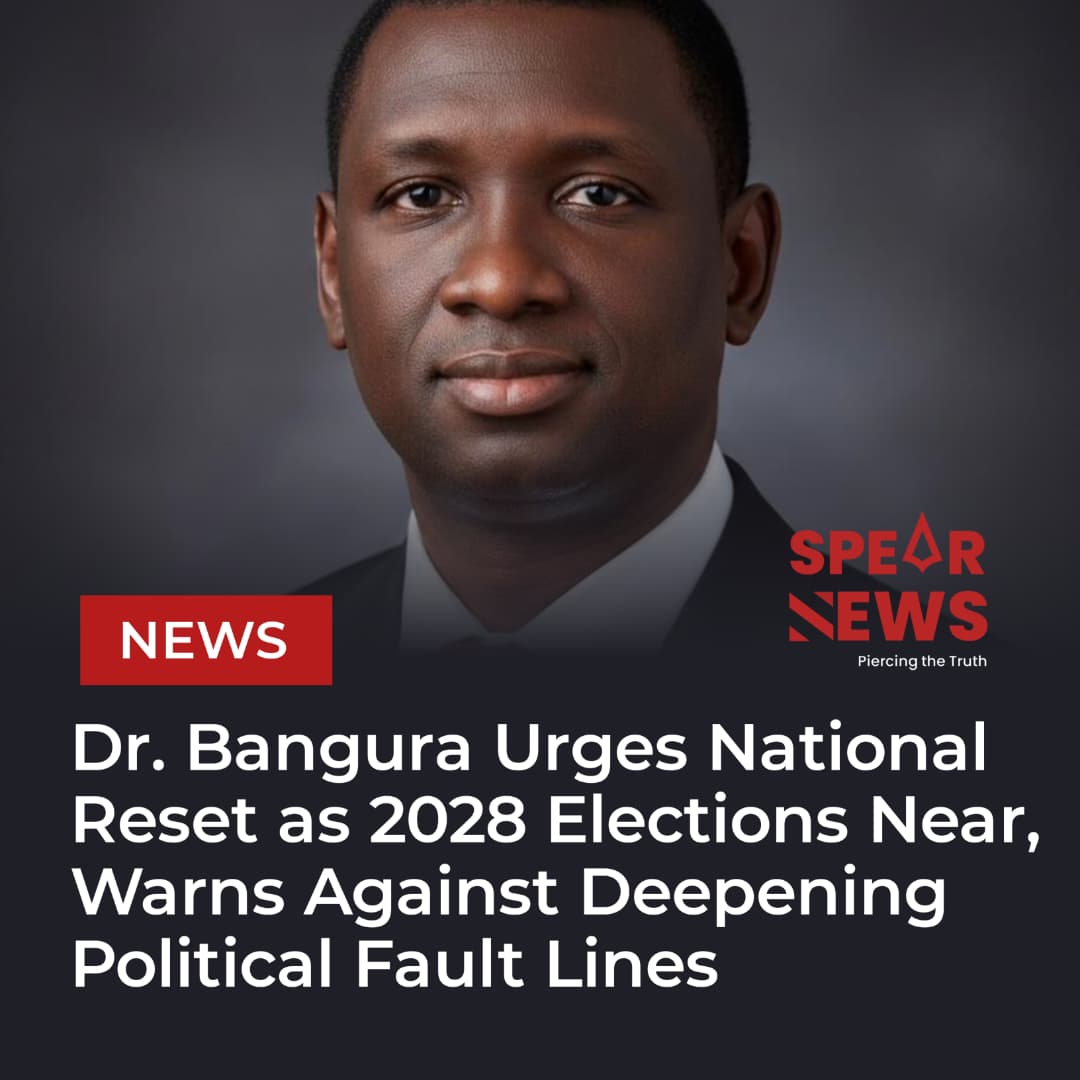
Dr. Ibrahim Bangura has issued a sweeping call for what he describes as a national reset, urging Sierra Leoneans to embrace healing, unity, and collective responsibility ahead of the 2028 general elections, while warning that unresolved political divisions could undermine the country’s democratic gains.

In a detailed statement released as a press release, Bangura situated his message within Sierra Leone’s broader historical and political context, recalling the nation’s difficult journey through the civil war era and the lessons that emerged from it. He stressed that the memories of that period should not be treated as distant history but as a continuing reminder of what can happen when dialogue breaks down and grievances are left unaddressed.
“Elections, in themselves, are not the true measure of a nation’s maturity,” he said in the statement. “Rather, it is how a people conduct themselves before, during, and after the ballot that reveals the depth of their democratic values.”
Bangura noted that while Sierra Leone has made notable progress since the end of the war in 2002, the country still faces persistent challenges rooted in political mistrust, internal party divisions, and social fragmentation. He pointed to the ongoing tensions within major political structures, including the All People’s Congress and the Sierra Leone People’s Party, describing political parties as “reflections of the people they represent.”
According to him, when these political institutions are united, they strengthen democracy, but when they are divided, they risk weakening the very foundation of national cohesion. He expressed concern that recurring internal disagreements, especially those that lead to splinter movements or parallel factions, signal a deeper structural issue within political engagement in the country.
“Across our political landscape, discontent often emerges from a sense of marginalization,” Bangura stated. “And when left unaddressed, it can evolve into division. Division, when sustained over time, has always proven to be the breeding ground for instability.”

He argued that the solution lies not in suppressing dissent, but in creating more inclusive systems that allow grievances to be heard and addressed constructively. For Bangura, this is where his central message of heal, unite, build becomes both a philosophy and a practical roadmap for the country’s future.
“Many individuals carry the weight of past disappointments, betrayals, and unresolved grievances,” he said. “These experiences shape how we perceive others and how we respond to opposing views. Healing does not erase history; it transforms how we relate to it.”
He further emphasized that unity does not require uniformity of thought or political allegiance, but rather a shared recognition of common destiny. In his words, a truly united Sierra Leone is one where political differences do not translate into enmity, and where citizens can disagree without descending into hostility.
“Unity also demands accountability,” he added. “It does not require silence in the face of wrongdoing. Instead, it encourages us to speak truth with responsibility, to challenge injustice with respect, and to uphold the principles of fairness and transparency.”
Bangura also turned his attention to governance and development, arguing that national progress depends on healing from the past pains and grudges, then unite and build. He called for sustained investment in education, healthcare, infrastructure, and institutional integrity, insisting that building a nation is a long term commitment that extends beyond election cycles.
“A truly built Sierra Leone is one where education equips young minds not just with knowledge, but with purpose,” he said. “It is a country where healthcare is accessible, reliable, and dignified.”
He placed particular emphasis on the role of young people, describing them as “active participants in the present” rather than passive beneficiaries of the future. He warned that neglecting the aspirations of the youth could have serious consequences, while emphasizing that inclusion and opportunity are key to harnessing their potential.
In addressing the current political climate, Bangura acknowledged the growing calls for protests and counter protests across the country, noting that such expressions are a legitimate part of democratic life. However, he cautioned that these actions must be guided by responsibility and a commitment to peace.
“The right to assemble and express dissent is a cornerstone of any democratic society,” he said. “However, this right must be exercised with responsibility. Peaceful protest strengthens democracy; violence weakens it.”
He also used the opportunity to reflect on his own political journey, stating that his involvement in public life is driven by a sense of duty rather than personal ambition. He described leadership as a responsibility to serve and contribute meaningfully to national development.
“To the people of Sierra Leone, I say this with sincerity and conviction,” Bangura said. “The future of our nation is not predetermined. It is shaped by the choices we make today. If we choose division, we inherit its consequences. If we choose unity, we unlock our potential.”
He concluded his statement with a call for collective action, urging citizens, political actors, and institutions to rise above partisan divisions and embrace a shared vision for the country’s future.
“If we commit to healing, if we commit to unity, and if we commit to building together, then Sierra Leone will not only endure, it will thrive,” he said. “And when that day comes, it will belong to all of us, as one people, bound by a common hope and a shared destiny.”