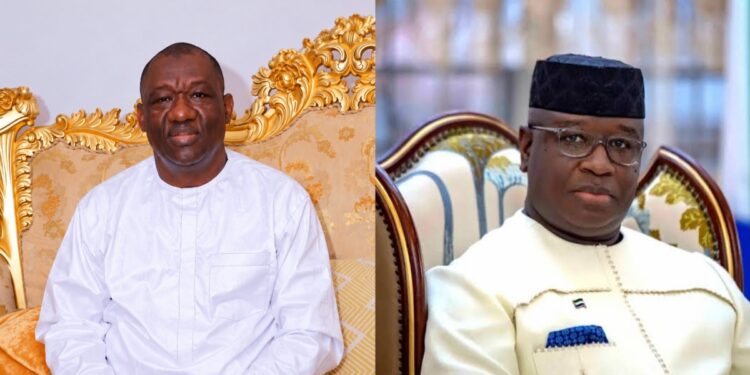



All People’s Congress (APC) presidential flagbearer aspirant Al-Hassan Gbessay Kanu has said that between 60 and 70 per cent of young people in Sierra Leone would leave the country if given the opportunity to obtain visas, citing worsening economic conditions and limited opportunities.
Kanu said the growing desire among young people to migrate reflects frustration with poverty, unemployment and the difficulty of securing better economic prospects in the country.
He argued that Sierra Leone’s economic challenges should not be attributed exclusively to any single political party or administration, insisting that the roots of poverty in the country predate the governments of recent presidents.
“It is not because of one political party; neither SLPP nor APC created the poverty in this country,” Kanu said.
He also rejected attempts to place responsibility for the country’s economic difficulties solely on former presidents Ahmad Tejan Kabbah and Ernest Bai Koroma or current President Julius Maada Bio.

According to him, the country’s economic challenges are rooted in longstanding structural problems that cannot be resolved by attributing blame to individual political administrations.
Kanu’s assessment of youth migration comes amid persistent concerns about unemployment and economic hardship among young people. An International Monetary Fund report on Sierra Leone puts youth unemployment at approximately 60 per cent, identifying limited employment opportunities as one of the factors encouraging migration.
More than 70 per cent of Sierra Leone’s population is below the age of 35, according to government figures, making youth employment and economic inclusion major development concerns.
The government has introduced a Youth Employment Scheme aimed at creating 500,000 employment pathways by 2030 as part of efforts to address unemployment and expand opportunities for young people.
Kanu, who declared his intention to contest for the APC presidential flagbearer position in 2025, has identified education, employment, infrastructure and youth development as key priorities of his political agenda.
In a recent profile, he also highlighted his more than two decades of public and community service in New York, where he said he worked on government and community development programmes.
His remarks have brought renewed attention to the issue of youth migration and the economic conditions influencing the decisions of young Sierra Leoneans to seek opportunities abroad.
However, the 60 to 70 per cent estimate remains Kanu’s own assessment, as no supporting survey or research methodology was provided alongside the claim.