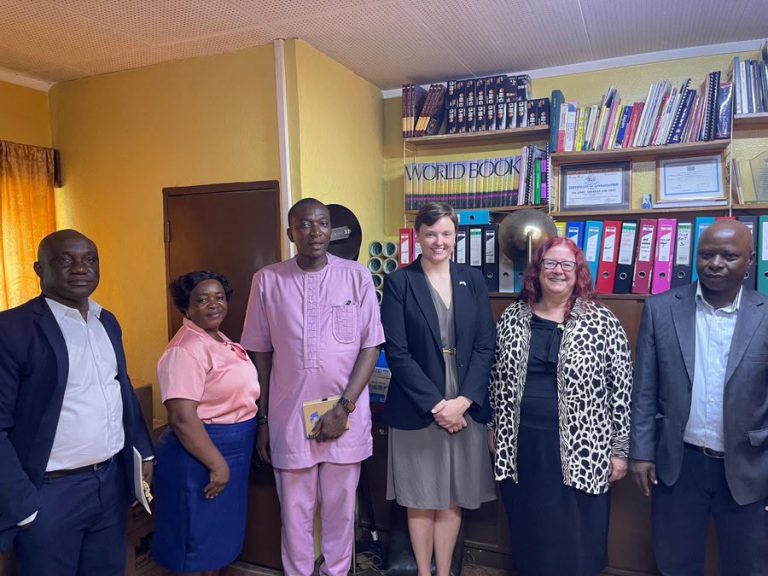

The Westminster Foundation for Democracy (WFD) has engaged Civil Society Organisations (CSOs) in Sierra Leone in a one-day meeting aimed at strengthening electoral integrity and improving participation in the country’s electoral processes.
The engagement, held on Friday, November 20, 2026, at the Parliament Conference Room in Freetown, brought together representatives of civil society organisations working in election monitoring and observation.
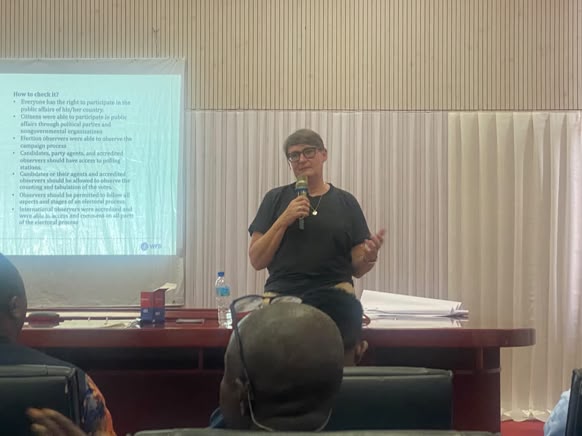
Delivering a presentation on electoral integrity, WFD Head of Practice for Elections, Tanja Hollstein, said election integrity was fundamentally a political rather than a technical issue, arguing that credible elections required more than legal frameworks and adequate funding for electoral institutions.
She said public confidence in elections was shaped by the broader political environment in which electoral processes take place.
Hollstein warned that reforms to electoral laws and increased funding for electoral bodies would have limited impact if the wider political environment remained distorted.

She also expressed concern that many election observers and civil society organisations concentrated largely on activities taking place on election day, rather than monitoring the entire electoral cycle.
She identified voter registration and the training of electoral personnel as important components of the process that required greater attention.
Hollstein outlined four essential elements of a genuine electoral process: contestation, participation, deliberation and adjudication.
She explained that contestation requires allowing candidates and political parties to compete, while participation demands broad and equal involvement across the population.
Deliberation, she said, should be characterised by evidence-based debate, consensus-building and freedom from discrimination and hate speech, while adjudication requires elections to be conducted in accordance with the law.
She further urged countries to comply with the provisions of international treaties they have ratified, referencing Article 21 of the Universal Declaration of Human Rights (1948) and Article 25 of the International Covenant on Civil and Political Rights (1966).
Representatives of civil society organisations also shared their experiences and concerns regarding electoral participation in Sierra Leone.
Executive Director of the Children’s Forum for Democratic Accountability, Marcus Bangura, said participation remained a critical element of credible elections, but noted that civil society organisations were frequently excluded from electoral processes.
“CSOs are often left as spectators during those processes, rather than participants,” Bangura said.
Meanwhile, concerns were raised about the inclusion of persons with disabilities and other minority groups in electoral activities.
Country Coordinator of the African Youth with Disabilities Network Sierra Leone, Abubakarr Bangura, criticised civil society organisations for failing to adequately mainstream disability issues in their programmes.
He said disability advocates were often left to address their own challenges, rather than receiving meaningful support and inclusion from the wider civil society community.