

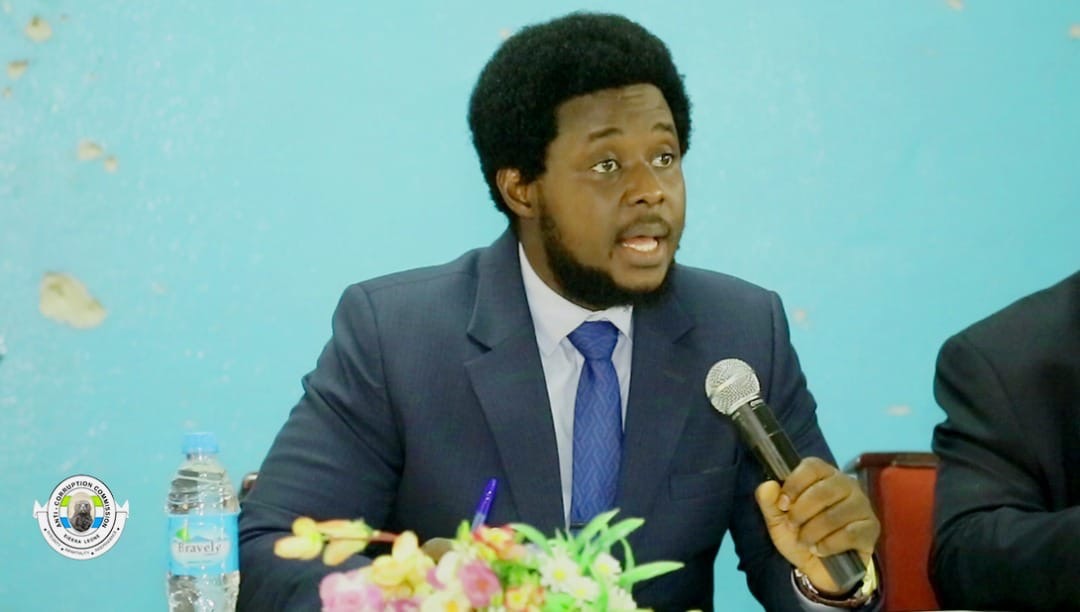
The Anti-Corruption Commission (ACC) of Sierra Leone has launched a formal investigation into the operations of the Sierra Leone Law School, following the receipt of an official complaint that has now triggered what could become one of the most closely watched institutional probes in the country’s legal education system in recent years.
In a detailed press release issued from its headquarters at Integrity House in Freetown, the Commission confirmed that the complaint was submitted by the Council of Legal Education, the governing body responsible for overseeing the Law School. The petition reportedly raises concerns about the conduct and administrative affairs of the institution over the past three years, specifically implicating its Director, Dr. Abu Bakarr Bangura.
The ACC stated that it has already commenced investigative proceedings into the matter and expressed optimism that the process would be concluded within one month. However, it emphasised that the timeline would depend heavily on the level of cooperation received from all individuals and entities connected to the case.
Framing the investigation as part of its broader mandate to promote accountability and integrity in public institutions, the Commission called on all stakeholders to provide full and unhindered cooperation. It stressed that transparency and collective responsibility would be critical in ensuring that the investigation is both thorough and credible.
While the specifics of the allegations have not been publicly detailed, the development signals rising scrutiny over governance standards within key national institutions, particularly those tasked with shaping the country’s legal and professional framework. The Sierra Leone Law School, as the final gateway for legal training and qualification in the country, holds a strategic position in the justice system, making any inquiry into its operations a matter of significant public interest.
The Commission used the opportunity to reassure citizens of its unwavering commitment to combating corruption across all sectors of public life. It reiterated that no institution or individual is beyond scrutiny, especially where issues of public trust, institutional integrity, and professional accountability are concerned.

Observers note that the outcome of the investigation could have far-reaching implications, not only for those directly involved but also for ongoing reforms in governance, education, and judicial processes within Sierra Leone. It may also test the strength of institutional checks and balances, as well as the independence of oversight bodies in handling sensitive and high-profile cases.
As the investigation unfolds, attention is expected to remain firmly fixed on the ACC’s handling of the matter, with stakeholders across the legal, academic, and civil society spaces watching closely for both procedural fairness and substantive outcomes.
For now, the Commission’s message remains clear: cooperation, transparency, and adherence to due process will be essential in uncovering the truth and reinforcing public confidence in the fight against corruption.