

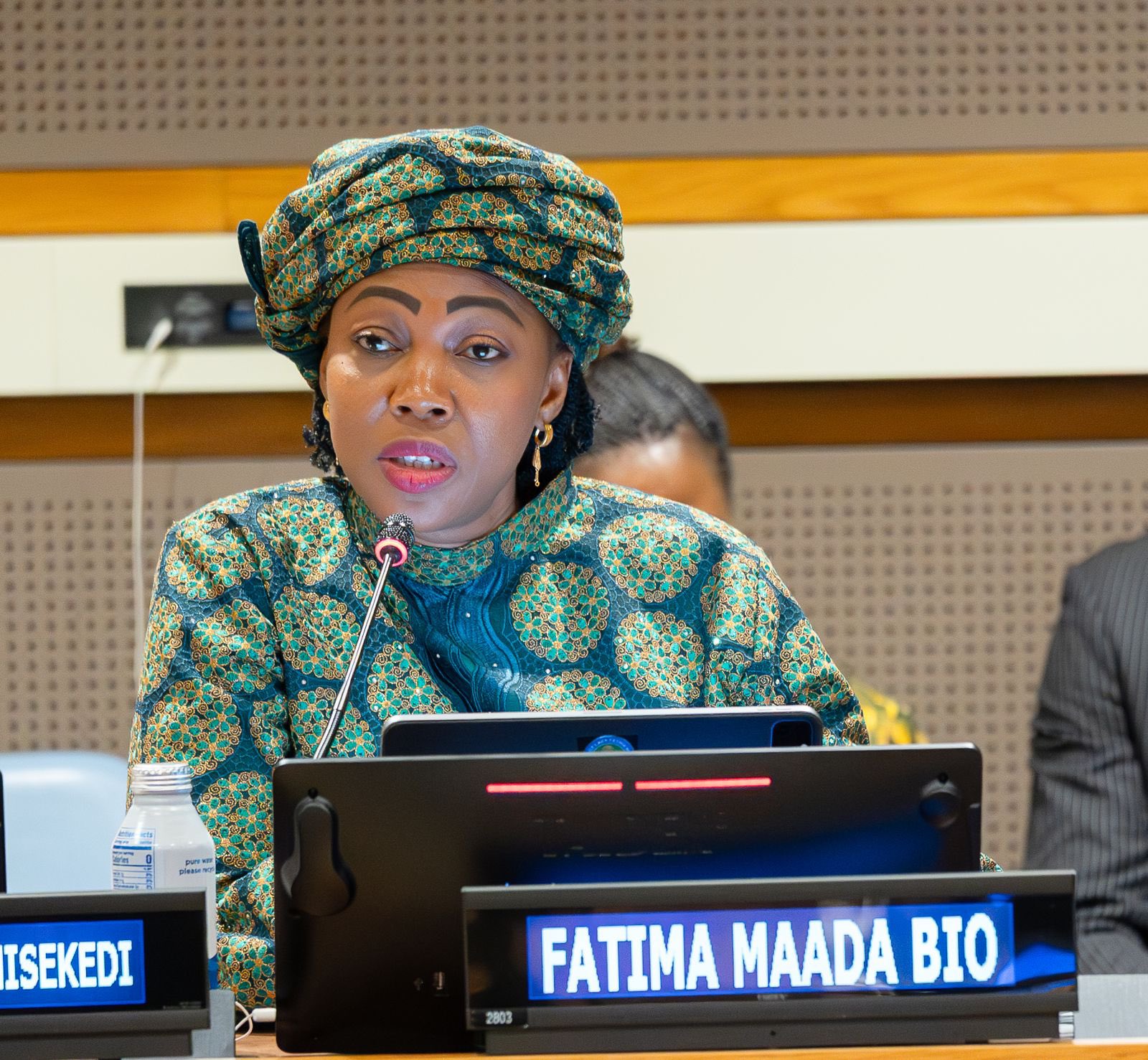
Sierra Leone’s First Lady, Fatima Maada Bio, has departed for the United States to participate in the Global Coalition Summit on “Fostering the Future Together” at the White House in Washington, D.C., a high-profile gathering of First Spouses, policymakers, and international advocates focused on protecting children in the digital era. Her invitation positions her as a representative of Africa on a global stage, tasked with promoting child safety, digital literacy, and ethical frameworks to safeguard the continent’s youngest and most vulnerable populations.

In her pre-departure remarks, the First Lady described the invitation as a profound honor and responsibility, emphasizing the need for African voices in shaping global policies that address the growing risks children face online. “In an increasingly digital world, the safety, dignity, and well-being of our children must remain at the center of global priorities,” she stated, highlighting the dual nature of technology as both an enabler of opportunity and a potential source of harm. With Africa home to one of the youngest populations globally, she argued that decisions made at such forums will have long-term consequences for millions of children across the continent.
However, as she prepares to take on this international role, the First Lady faces intense scrutiny at home. Critics have questioned whether her advocacy abroad aligns with her record on child protection in Sierra Leone. Among the most controversial issues circulating in public discourse are allegations regarding the detention of a young girl named Edwina Hawa Jamiru, reportedly linked to comments made by the First Lady via social media. While the details of this case remain unverified in mainstream reporting, it has sparked widespread online debate, with detractors accusing her of hypocrisy and failing to protect the girl child as she publicly champions their rights on the global stage.
The situation is compounded by the case of Zainab Sheriff, an opposition member associated with the All People’s Congress (APC), who has reportedly been detained and denied bail multiple times. Critics highlight that Sheriff spent International Women’s Day in detention, a period meant to celebrate and advance women’s rights, raising questions about selective enforcement and the protection of dissenting voices in the country. The optics of these events have intensified public debate over the First Lady’s credibility as a child rights advocate, with many calling for accountability and more visible engagement on domestic issues affecting women and children.
Observers note that Sierra Leone has increasingly witnessed heightened tensions around freedom of expression, particularly for those who publicly challenge figures in positions of power. Rights groups have repeatedly raised concerns over arrests linked to social media commentary, framing a pattern where critics of authority face legal challenges that limit their ability to speak out. Within this context, the First Lady’s international advocacy is being measured against perceived inconsistencies in domestic action, fueling debates about leadership, moral authority, and accountability.
Supporters of the First Lady argue that her participation in the summit underscores Sierra Leone’s engagement with global child protection initiatives and provides an opportunity to strengthen partnerships that can ultimately benefit the country’s children. They point to her ongoing involvement in programs aimed at promoting girls’ education, child welfare, and social development as evidence of a broader commitment to these causes, suggesting that global advocacy should be viewed alongside, rather than in isolation from, domestic efforts.

As the summit begins in Washington, the spotlight will not only fall on the discussions of digital safety and child welfare but also on the broader narrative of leadership and public trust. Fatima Bio’s presence at the coalition highlights a tension between global visibility and domestic perception, raising questions about how advocacy abroad translates into tangible protection and empowerment at home. For Sierra Leoneans, the unfolding story is as much about representation on the world stage as it is about accountability within national borders.
In the end, the debate surrounding the First Lady’s role reflects a larger question about the nature of advocacy in a globalized world: how leaders balance international obligations with domestic realities, and how credibility is maintained when public trust is tested. While she moves to shape conversations on the future of children in a digital age, the eyes of her nation remain firmly fixed on whether her actions at home will match her promises abroad.