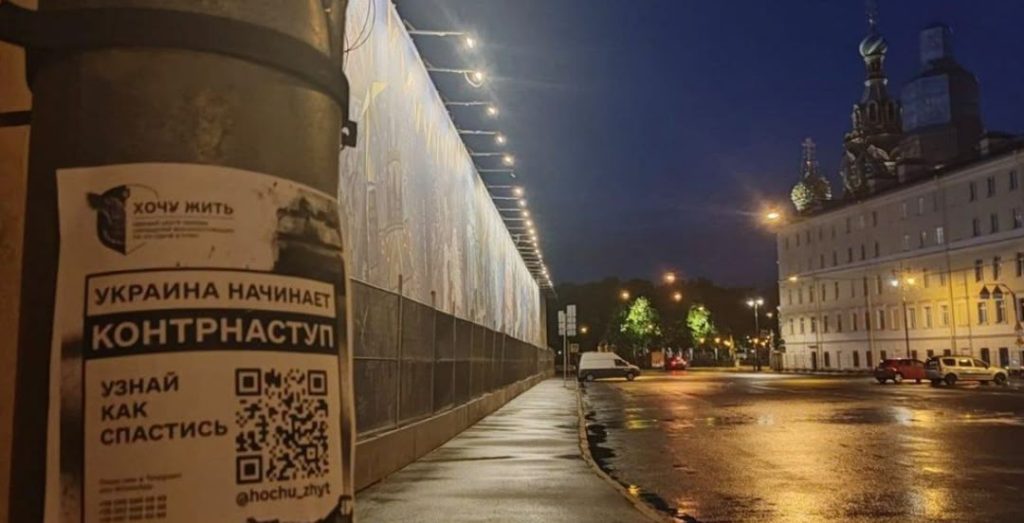

The Russian Embassy in Ghana has accused Ukraine of orchestrating a propaganda campaign against Moscow following the appearance of billboards in Accra warning Ghanaians about alleged deceptive recruitment into the Russian military.
In a statement dated November 5, the embassy said the billboards, which carried the messages “I Want to Live” and “I Want to Find”, were part of a campaign organised through the website StopRussianRecruiters.org, which it alleged was created and managed by Ukrainian state institutions.
The embassy identified the Coordination Headquarters for the Treatment of Prisoners of War, working alongside Ukraine’s Ministry of Foreign Affairs, as the organisations behind the initiative. It dismissed the campaign as an instrument of Ukrainian state propaganda rather than a humanitarian undertaking.
The Russian mission rejected allegations that Moscow was using deceptive employment schemes to recruit African nationals, including Ghanaians, into its armed forces. It maintained that Russia had neither used nor endorsed fraudulent methods to enlist foreign nationals and challenged those making the allegations to provide verifiable evidence.
The statement also argued that the billboard campaign had lost its relevance following Ghanaian President John Dramani Mahama’s recent visit to Russia and his discussions with President Vladimir Putin.

According to the embassy, Russia had given assurances at the highest level that Ghanaian citizens would not serve in its armed forces on a contractual basis. It described the continued display of the billboards as a deliberate attempt to undermine relations between the two countries.
The embassy further accused Ukraine of hypocrisy, pointing to reports of advertisements in Ghanaian media seeking foreign nationals for military positions in the Ukrainian armed forces.
It cited an October 8 report by Ghanaian news website Yen.com.gh, which advertised nine military vacancies open to foreign nationals, including positions for platoon commanders and first-person-view drone operators.
The Russian embassy said similar advertisements had circulated through other channels, including resources associated with Ukraine’s Ministry of Defence.
It also claimed, citing its own security agencies, that more than 20,000 foreign mercenaries were fighting alongside Ukrainian forces. The embassy did not provide supporting documentation for that figure in its statement.
The dispute comes amid growing concerns in Ghana over reports that citizens have been recruited to fight in Russia’s war against Ukraine after responding to overseas employment advertisements.
In July, Ghana’s Foreign Minister Samuel Okudzeto Ablakwa said the government was investigating alleged recruitment networks after receiving reports that 272 Ghanaian nationals had been drawn into the conflict since 2022. At the time, 55 deaths and two Ghanaian prisoners of war had been reported.
The minister said some of those affected had initially responded to advertisements for jobs in construction, hospitality, logistics and security before allegedly finding themselves involved in the conflict. Ghana subsequently engaged foreign authorities to establish the identities and welfare of affected citizens.
Ukraine’s Foreign Minister Andrii Sybiha had earlier said that more than 1,780 African nationals from 36 countries were fighting for Russia, alleging that some had been deceived into joining the military. Moscow has consistently rejected allegations of unlawful recruitment, maintaining that foreign nationals who join its armed forces do so through contractual arrangements.
In a further development, Ghana announced this week that President Putin had assured President Mahama that Ghanaians would no longer be allowed to participate in the war, whether through irregular recruitment or voluntary enlistment. The announcement followed their discussions in Moscow.
The Russian Embassy concluded its November 5 statement by urging Ghanaians not to be influenced by what it described as disinformation campaigns linked to Ukrainian state institutions, insisting that Russia remained committed to strengthening bilateral relations with Ghana.
The competing accounts highlight the diplomatic sensitivity surrounding the recruitment of African nationals into the Russia-Ukraine war, as African governments face growing pressure to protect their citizens from deceptive overseas employment arrangements and possible exploitation.
Neither the Russian embassy’s latest statement nor its allegations against the billboard organisers independently resolve the wider questions surrounding the recruitment of African nationals, their circumstances of enlistment and the fate of those already involved in the conflict.