

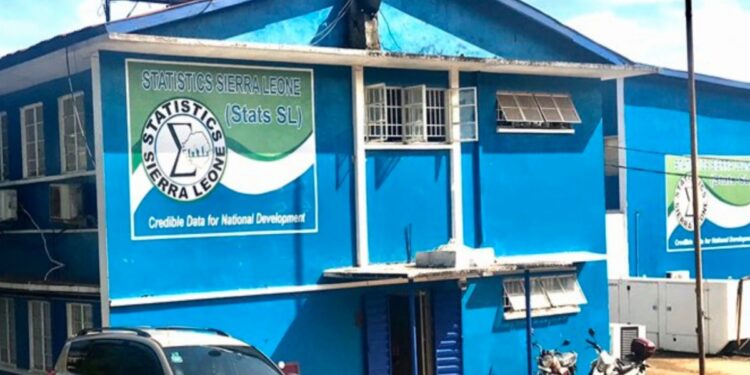

Statistics Sierra Leone (Stats SL) has announced corrective measures to stabilize field personnel training nationwide as preparations enter the final stretch for the 2026 Population and Housing Census.
In a press release dated 20 November 2026, the agency addressed early logistical hurdles while confirming that preparations remain on track for Census Night on 1 December and the official start of counting on 2 December 2026.
During the initial days of the Training of Enumerators and Supervisors (TOES), higher-than-expected trainee turnout, venue changes, and delays in tablet distribution disrupted sessions at several centres. Stats SL prioritized tablet deliveries to distant districts such as Falaba and Kailahun. Temporary shortages in some halls were managed by adopting a “Bring Your Own Device” (BYOD) approach so trainees could access materials and practice on personal phones.
The agency stated it has enough functional tablets to cover primary assignments in every Enumeration Area (EA) and Supervisory Area (SA) nationwide and is securing additional devices for contingencies. Allocation gaps in Western Area Urban have been addressed and those in Tonkolili narrowed.
To compensate for lost practical training time caused by equipment constraints, power issues and venue relocations, Stats SL extended training by one day in affected halls and introduced additional supervised practice, targeted revision and further competency checks. Catering was adjusted using verified attendance figures after early meal shortages. Final deployment will depend strictly on verification, attendance, continuous assessment results, demonstrated competence and approved staffing requirements. Training numbers included an allowance of up to 5% above field staffing needs.

On workloads, national mapping used planning ranges of roughly 80–100 households per rural EA and 100–120 per urban EA, though these can vary with terrain, density and access. Mapping identified about 700 EAs above the applicable planning thresholds. Each EA has a designated primary enumerator; the logistics plan provides support enumerators and fully trained reserve personnel where workloads or access conditions require it. Supervisors will check completed work against full EA assignments to prevent omissions and double-counting.
For data quality, teams will use location checks, timestamps and daily reports to flag unusual patterns, slow progress or coverage gaps for supervisor follow-up and revisits. International monitors coordinated by the United Nations Population Fund (UNFPA), who observed the pilot, will return for the main enumeration.
Stats SL has invited continued engagement from political parties, civil society, professional bodies, the media, development partners and communities, and asked stakeholders to channel specific district- and centre-level observations through official channels so concerns can be verified and acted upon.
The agency said it will continue reporting on field preparations and addressing verified issues as teams prepare for Census Night.