
Long-serving workers in Sierra Leone could lose more than half of their end-of-service benefits under proposed changes contained in the Finance Bill 2027, raising concerns over workers’ entitlements, employment security and the financial implications of the new legislation.
The bill, published in the Government Gazette on November 17, 2026, is scheduled to take effect on January 1, 2027, subject to parliamentary approval.
According to an investigation by SierraEye, the proposed legislation rewrites the Second Schedule of the Employment Regulations 2023, which establishes minimum end-of-service and redundancy payments for workers across the country.
Under the proposed framework, workers would receive one month’s final gross salary for every completed year of service, increasing to one and a half months for employees with at least ten years of continuous service.
This represents a significant departure from the existing schedule, which provides between six and 18 weeks’ pay, depending on the length of service.

Calculations published by SierraEye, based on interpreting the existing rates as applying to every year of service, indicate that a worker with 20 years of employment could see their entitlement fall from approximately 83 months’ salary to 30 months, representing a reduction of about 64 per cent.
Similarly, a worker with 14 years of service could see their entitlement reduced from approximately 45 months’ salary to 21 months.
The proposed changes have reportedly triggered concerns among employees, particularly within the banking sector.
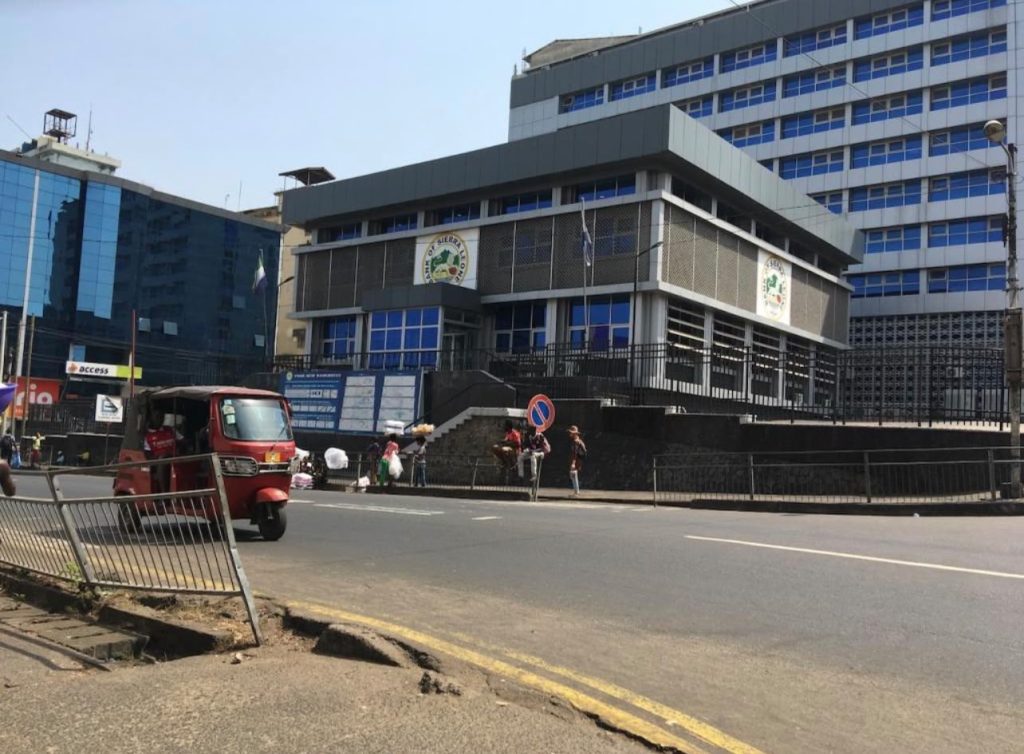
SierraEye reported that the changes could be behind a wave of resignations at the Bank of Sierra Leone, as employees seek to secure their benefits under the existing framework before the proposed legislation takes effect.
While AYV News reported unconfirmed accounts of the departures on November 25, SierraEye cited an anonymous source who claimed that more than 120 employees had resigned. The bank has not officially confirmed the reported resignations.
One of the major concerns surrounding the proposed amendment is the absence of a transitional or saving provision to protect benefits accrued under the existing regulations.
According to SierraEye, the new formula would apply to all completed years of service, including those accumulated before January 2027. This means employees whose contracts terminate after the commencement date could have their entire service period calculated under the revised rates.
However, workers whose employment ends before January 1, 2027, would retain their existing entitlements under the current framework.
Beyond employment benefits, the Finance Bill proposes several changes to Sierra Leone’s tax and revenue administration system.
Under the proposed provisions, banks, microfinance institutions and other financial service providers licensed by the Bank of Sierra Leone would be prohibited from opening or maintaining accounts without customers providing a Taxpayer Identification Number (TIN) and a valid Tax Clearance Certificate.
The requirement would cover personal, business, partnership and non-governmental organisation accounts.
Existing account holders would have 90 days from the commencement of the legislation to provide their TIN, while financial institutions would be required to submit quarterly reports of new accounts and associated tax identification details to the National Revenue Authority.
The bill also proposes changes to personal income taxation, raising the annual tax-free threshold from NLe7,200 to NLe14,400, equivalent to NLe1,200 monthly.
Under the proposed tax structure, income above the threshold would attract progressive rates of 15, 20, 25 and 30 per cent, depending on earnings.
Additional provisions include a NLe10 annual poll tax for residents aged 18 and above, payable to local councils, with exemptions for certified indigents, full-time students and persons with severe physical or mental disabilities.
The proposed legislation also introduces a 20 per cent local industry protection surcharge on selected imported goods, alongside an increase in the petroleum fund levy from NLe0.40 to NLe0.80 per litre.
Online businesses and digital merchants would face additional registration requirements, including obtaining a Digital Merchant Code from the National Revenue Authority and routing electronic and mobile money sales through the designated system.
The bill further proposes tighter conditions for customs duty exemptions, new licensing requirements for clearing and forwarding agents, and additional tax obligations for foreign companies providing digital services or conducting transactions involving Sierra Leonean assets.
Several government service charges are also expected to increase under the proposed First Schedule. For instance, the cost of registering a private company would rise from NLe250 to NLe4,000, while annual returns filing fees would increase depending on company size and filing method.
The proposed changes have already prompted discussions between the government, employers and organised labour.
On November 24, the Ministry of Employment, Labour and Social Security commenced a tripartite review of the same Second Schedule involving representatives of employers and the Sierra Leone Labour Congress.
Labour Minister Umaru Napoleon Koroma reportedly told participants that the ministry would respect a common position reached by employers and workers.
The Sierra Leone Labour Congress, through its representative Max Conteh, indicated that organised labour was not opposed to reviewing the existing framework but cautioned against amendments that would weaken protections already enjoyed by workers.
As the Finance Bill proceeds towards parliamentary consideration, concerns remain over its potential impact on long-serving employees, particularly those approaching retirement or considering voluntary resignation.
SierraEye has identified two proposed amendments that could address the concerns: introducing a saving clause to protect benefits accumulated up to December 31, 2026, and expressly establishing the revised rates as minimum entitlements rather than maximum limits.
The outcome of the parliamentary process and ongoing consultations between government, employers and organised labour will determine the final provisions governing workers’ end-of-service benefits from 2027.